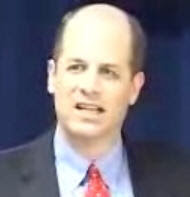
The April 1 Fly-In, Rally and Congressional Briefing took place yesterday morning in Washington, D.C. in front of a Standing Room-only crowd. We had attendees who drove through the night to be there, and others that flew in from all over the country. In addition, we had many, many participants who joined us electronically, watching the streaming video or listening to the streaming audio online (http://www.amendthecpsia.com/) and "tweeting" and chatting all throughout the event. We know we had online participants from at least 43 States (Minnesota took the prize, in case you were curious), as well as Canada, China, Germany, Hong Kong, India, Israel, Netherlands, Portugal, Slovenia, United Kingdom and Uruguay. This was a truly worldwide event involving an estimated 2,000 people (or more).
The speakers at the Rally included 16 small businesses or individuals (including an eloquent six year old dirt bike racer), one large business and three industry organizations (one was a last minute fill-in for a small business speaker who had to cancel for health reasons), three scientists, plus two Senators and six Representatives. Despite our efforts to entice their participation, we were disappointed to not have even one Democrat legislator as speaker. Notably, Mr. Waxman scheduled a last-minute committee meeting directly opposite our Rally, so presumably he was not favorably inclined to let his fellow Democrats visit HVC201 to be with us. His loss. . . .
Our impressive line-up of legislators engaged the attendees with news flashes like Rep. Joe Barton's announcement of the introduction of HR 1815 Consumer Product Safety Solutions Act of 2009 with 17 co-sponsors, and the revelation by Rep. Cliff Stearns that U.S. government scientists had admitted that the phthalates ban was an over-reaction and was unnecessary, as well as "Inside the Beltway" insights into the pending legislative process. Industry speakers made clear that the widespread and devastating gratuitous harm caused by the CPSIA criscrosses industry, regional and channel of trade lines, and the toxicologists were able to clarify that there is no public health "crisis" to solve or being solved by the CPSIA. Our individual speakers helped make clear that the law is making day-to-day life a lot less fun for many people, too - reducing our quality of life here in America. All together, our speakers made a compelling, reasonable, rational case against the misguided and misconceived CPSIA.
Bringing this convincing message to the Hill is only part of our challenge. Getting some legislative action is the goal. We have legitimized our stance, and proven that the ill effects are real and are not the imagination of easily dismissed "Mommy Bloggers" or "angry young men". Nonetheless, it remains our challenge to convince Democrats to act. Tragically, for reasons that are hard to comprehend, this has become a partisan mess, and the Democrats will not bend on the law, despite our efforts to expose the "unintended consequences" of this evil law. Despite Mr. Barton's entreaty that we can trust the Democrats to do the right thing for our country, the Dems remain resolutely, defiantly deaf to our pleas. Clearly then, our challenge post-Rally is to raise the din to higher and higher levels.
It is frustrating that our job is not done, but the reality is that it just isn't done. I believe that it is getting closer to the time when we must resort to more intensive political activism. If we cannot gain the cooperation of the Democrats, if they stick to their "Just Say No" policy while our businesses melt, our capital is depleted and our jobs are destroyed, our cherished family leisure activities are curtailed, our schools are deprived of needed supplies and teaching materials and our libraries become book prisons, we will have no choice but to identify better representatives and actively work on their behalf to send them to Washington to fix this mess.
The nonsense idea promoted by the Waxman/Rush/Rockefeller/Pryor axis is that the current CPSIA dilemma is somehow Nancy Nord's fault, and if she were replaced as Chairman of the CPSC, all would be well. This contention is hard to fathom in light of the last 23 decisions made by the two current Commissioners, all by a vote of 2-0. Yes, they have voted together 23 times in a row. Would a third vote change those outcomes or make the law any more coherent or flexible? The logic of this argument is baffling to many people - and the Democrats provide no details to back up their puzzling assertion. Perhaps the legislative leaders are looking for a Chairman that is willing to break the law . . . . The demands for a new Chairman are usually paired with a savaging of Nancy Nord for her "role" in this process. She apparently has had enough of the personal attacks, and sent a letter to President Obama dated April 1 (presumably not as an April Fool's joke) asking that he promptly appoint a new CPSC Chairman. In her letter, she helpfully documents the nasty mess the lucky candidate will inherit. No doubt that will be a handy recruitment tool for Mr. Obama. Not to worry though - Mssrs. Waxman, Rush, Rockefeller and Pryor have it all figured out, this next person will work miracles and we will all be delighted with the solutions they magically conjure up. Uh-huh.
The Democrats have a choice - fix the mess they created, or we will find somebody else to do it for them. As the old saying goes, Change the Man, or Change the Man. Henry Waxman, do you hear us?
Rick
Thursday, April 2, 2009


CPSIA - Contesting the Higher Ground (Part II)
It's hard to get my head around the emerging fact that certain consumer groups will stop at nothing to distort the record for their own benefit. If indeed these groups are looking out for everyone's "best interests", I am confounded to understand why distortion of the facts, or worse, is necessary to make their points. I would have thought that right is right and wrong is wrong, and therefore, street fighting tactics would not be necessary. And it also turns out that they have little interest in freedom of speech, since they seem rather selective in whose comments they choose to publish. A little message control going on? Who do they think they are, the New York Times?
Consider this do-gooder: Apparently, consumer "advocates" at the Center for Justice and Democracy have been leaving comments around the blogosphere pointing to their "debunking" of the "myth" that the CPSC is unable to grant exclusions to the lead standards. See http://www.thepoptort.com/2009/03/true-lies-debunking-a-major-cpsia-myth.html. The brave author of this "debunking" signed his name as "Joe Consumer". Apparently, Joe may be brave enough to use his real name (right, Joe?) but not to post opposing views. I left a comment in response to the "debunking" but it must not have met Joe's demanding standards for publication. So I am reproducing Joe's post and my comment - you decide who is right.
Rick
March 27, 2009
True Lies: Debunking A Major CPSIA Myth
One of our favorite things to do here at ThePopTort is debunk abject hooey, so today we’ve chosen to address one of the most insidious CPSIA myths out there—the notion that the Consumer Products Safety Commission’s (CPSC) “hands are tied” when it comes to issuing exemptions to small enterprises, like craft shops and libraries, that find it hard to comply with this landmark child-safety law. The theory is, Congress must change or scrap the legislation because it has rendered the CPSC powerless.
We know this is a myth, but incredibly, we’ve discovered that the CPSC thinks so too! That’s right—the CPSC is so absolutely certain of its authority to give the small business community (that it claims to be so concerned about) “exclusions” to the CPSIA, that it has already clearly asserted it—that is, to avoid complying with another law, at small business’ expense.
The Regulatory Flexibility Act requires agencies like the CPSC to analyze the impact of their actions on small businesses, and when it’s bad, to come up with alternatives. Here, the agency decided the CPSIA’s impact on small businesses wasn't bad at all. Why? Because of its authority to issue exemptions to small businesses from the CPSIA! (See Part G of this document.)
Now when it comes to the actual issuing of exemptions, it is true that CPSC must first adopt testing protocols to determine that a product is safe. It already could have done that. In fact, it had many months to do that. But the agency still hasn’t done it.
Why? Well, we can only just shake our head at this one. Nancy Nord, current CPSC Chair and Bush holdover, is complaining Congress didn’t give them enough money.
Remember 2007, the “Year of the Recall” when the CPSC was under fire from all directions for its complete and utter failure to ensure the safety of consumer products? Well, in an act that “stunned” consumer advocates as well as some Senators, Nancy Nord “asked lawmakers in two letters not to approve the bulk of legislation that would increase the agency’s authority, double its budget and sharply increase its dwindling staff.” That’s right, she said NO to congressional attempts to raise the CPSC budget to $141 million, increase staffing levels by about 20 percent, and “give the commission broad new powers to police the marketplace.”
So listen up, small enterprise folks. The CPSC had three different opportunities to come to your aide and it turned its back on you every time. This agency is not powerless to give you exemptions and it says so itself. It just chooses not to. In the final analysis, there is no need for Congress to change this law. What we need is a change in the CPSC leadership.
Posted by Joe Consumer at 11:08 AM
My Comment in Reply (Unpublished):
That's a great debunking! I only wish you had read the law and cited language from it to back up your "debunking". Laws are not emotion or feelings - they are rules, lines in the sand. The words used in the rules define them. In this case, it is absolutely clear, crystal clear, that the "myth" you are "debunking" is neither a myth nor untrue.
The ONLY exceptions to the lead standards are found in Section 101(b)(1) of the CPSIA. In this famous section, exceptions are permitted only based on "the best available, objective, peer-reviewed scientific evidence" that NO lead can be absorbed from the item or material in question. The CPSC has opined in writing and orally on several occasions that no such material exists on Earth. Perhaps Congress was intending this exemption to apply to materials from Outer Space? If not, where's the flexibility?
Notably, in Section 101(d), the CPSIA defines "technological feasibility", a first for CPSC legislation. The definition has no concept of economics in it. This is the rule that will dictate whether we must move to a 100 ppm standard for lead (retroactive, of course!) in a couple years. Apparently, the economics of our businesses is no concern when considering feasibility. I hope Congress will be able to provide us with a script to explain this to our banks at the appropriate time. This rule is not subject to exceptions, and may induce a new death spiral for yet more companies.
If the foregoing inflexibility was not enough for Congress, no matter what the pain to thousands of companies affecting millions of products and countless consumers, families, schools and teachers, the CPSIA provides yet another suffocating stricture in Section 101(e). In this provision, the CPSIA limits what little possible relief is possible, stating that "[t]he pendency of a rulemaking proceeding . . . shall not delay the effect of any provision or limit [under Section 101.] nor shall it stay general enforcement" of such provisions. In other words, no matter how ridiculous, pointless or damaging the provisions of the law, they must be enforced until the stringent standards of the law are met to overturn them. And we now know that some of these standards cannot be set aside for the materials we tend to use here on Earth.
You're right - the CPSC's hands aren't tied! I think it's more like being bound and gagged.
Sunday, March 29, 2009
CPSIA - WSJ Editorial 3-30-08
Pelosi's Library Quarantine
The CPSC is left cleaning up the House Speaker's messy child-safety law.
It looks like "Jumanji" in local libraries these days, after the classic children's book about chaos unleashed by the failure to heed warnings. In February, an overzealous law governing lead in products resulted in toys going from store shelves to the trash heap. Now, confusion over how the rules affect children's books has led some libraries to rope off kids' sections.
Last summer, the Consumer Product Safety Commission (CPSC) interpreted the 2008 law to include children's books, though exactly what that means is anyone's guess. CPSC spokesman Scott Wolfson told the Associated Press that until the agency can give clearer guidance, especially on books published before 1986, public and school libraries "should take steps to ensure that the children aren't accessing those books." The agency hurried to say it didn't mean to tell libraries to toss the books, but that it is "investigating" whether there are unsafe lead levels.
Democrats in Congress have leapt to criticize acting CPSC Chairman Nancy Nord, in hopes President Obama will replace her. But the real culprit here isn't the CPSC, which is overwhelmed with requests from manufacturers trying to make sense of the chaos that Congress created. House Energy and Commerce Chairman Henry Waxman has dismissed efforts to improve the law, claiming the real problem is that "misinformation has spread" about the impact on businesses.
Older books pose hardly any danger, according to safety experts at the Centers for Disease Control. The problem is the ambiguity in a law that leaves businesses facing lawsuits if they can't prove their products are safe. In addition to libraries, thrift stores, church bazaars and small batch toymakers are also unclear what they can and can not sell. Makers of bicycles and ATVs have pulled youth models -- designed to increase safety -- off the showroom floor at a cost of hundreds of millions of dollars.
Nancy Pelosi boasted last summer that the toy safety law would mean products weren't merely made differently in the future but would be removed from the shelves today. That's the real source of this mayhem, as she was amply warned at the time by Democrat John Dingell, among others. Ms. Pelosi prevailed, and now the harm to thousands of businesses, charities and even public libraries is manifest. Since the House Speaker won't admit a mistake and fix the law, the CPSC must do what it can to prevent more damage to the already challenging economy.
http://online.wsj.com/article/SB123837358752967989.html
Subscribe to:
Posts (Atom)


 Posts