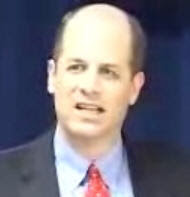
Sadly, after four years of CPSIA advocacy, it’s finally time to say farewell. The timing of my goodbye comes as we approach the third anniversary of President Bush signing the CPSIA into law (August 14, 2008). I am paroling myself for time served. This is my final blogpost.
This exhausting journey came to a crashing end because I concluded that I am not able to engineer further relief from this terrible law. Congress, having finally passed a CPSIA amendment (HR 2715) after three frustrating years of our begging for help, is finished with this issue for good. They put an end to the lingering issues by cutting loose all the politically sensitive groups affected by the CPSIA (ATVs, bikes, books, resale goods). Those of us with working memories will recall the many words spoken over the last three years about the lead "dangers" presented by these goods to justify their inclusion in the law in the first place. I guess Congress decided lead risks wear off for certain kinds of products. Interesting . . . .
The remaining affected industries will not receive additional relief from Congress because any significant political pressure which might drive change has been neutralized. This was a Democratic strategy to make this issue go away (divide-and-conquer), and it worked. I believe the CPSIA will not be amended in the next two years in any way and may not be amended in a meaningful way again for many, many years. Read HR 2715 – that’s all you are likely to get from Congress.
I have no realistic expectation of further relief from the CPSC, either. The three Democratic votes on the Commission can’t be beaten, and as I have shown in this space, they always vote as a pack with no meaningful exceptions. One "triple vote" will always beat two votes. These Dems have selective hearing or memory or just don’t give a darn about data or testimony that doesn’t validate their conclusions. The outcome of a CPSC hearing, Commission meeting or request for public comment on a CPSIA issue is about as much in doubt as the average Moscow show trial. [It just takes a little longer. . . .]
The comparison to Stalin's show trials is apt. In the 1930's, the Soviets cynically used legal proceedings to lend the appearance of legitimacy to its "findings of fact" (generally based on coerced confessions) and its rendering of "justice". Of course, the trials were just a sham, nothing more than an administrative procedure for implementing a political agenda. And at the CPSC? I cannot point to a single CPSIA issue on which the Democrats showed an open mind or were capable of being influenced by data or reason. Draw your own conclusions, notwithstanding Bob Adler's self-proclaimed "agony" in always casting his votes against businesses. After naively testifying at, contributing to or analyzing and reporting on so many CPSC proceedings that I have lost count, I have totally given up on these people and consider influencing them a lost cause. It’s not worth my time to continue to attempt to work with them.
So with no hope of further legislative relief for the foreseeable future and with closed minds and closed doors at the CPSC, this is not a worthwhile venture for me anymore. I cannot justify it and plan to turn my attention to other opportunities with greater promise of my adding value. I am done with the CPSIA and the CPSC.
Despite the almost overwhelming urge to “sum it all up”, I don’t intend to offer any concluding wisdom. Already prone to repeat myself endlessly in this space, I have clearly stated my position on the issues and my opinions haven’t changed. You know how I feel with specificity. Given that I believe it’s all over but the tears, I can’t see what good would come from parting words on the “war”.
Kind readers, you have become my friends and family. I really value your readership and your support. This blog reflects your pain and your passion, too. We have fed off each other. I want to thank you. You have sustained me.
For those of you who read this blog just to see what I would say about you and who will not miss my little missives (or me), I can only say that I have been completely honest and candid in this space, working with facts and real data, consistently documenting my source materials and my analysis. I respect that you may disagree with my conclusions or opinions, but I don’t respect that you refused to take me on. For all your whining and grousing about me, generally behind closed doors, none of you ever stood up in this space to tell me where or how I was wrong. You apparently lacked the courage to engage in a true, open debate where the outcome was not predetermined in your favor. Perhaps you preferred to ignore me, my arguments and my data, hoping I would go away. In the end, you got your wish. Lucky us.
So the battle ends for me, here. Perhaps someday we will see the return of common sense and respect for corporate members of our society in our safety laws. Until then, good luck to you and Godspeed.
Rick
Friday, August 12, 2011
CPSIA - Obama Will Sign HR 2715 CPSIA Amendment Into Law Today
President Obama is expected to sign HR 2715, the CPSIA amendment that picks winners and losers and represents the end of legislative action to repair the misconceived CPSIA. Obama has to clear his desk before his vacation next week. This will be one of his last "to do's" before R&R begins.
Now what?
Here is my prediction:
a. The push will be on for the end of CPSIA rulemaking. Not only are the Dems on the CPSC Commission tired of this (times ten) but Congress wants this off their plate, too. Our petty concerns have been "addressed" and besides, what could go wrong anyway? Um, well, consider this "colloquy" between three powerful Democrats in the Senate. Before you read on, please note:
- HR 2715 is a bipartisan bill, sponsored by both parties (obviously). This dialogue is among three like-minded Democrats. Why isn't it a colloquy between both parties? Is this even relevant? As you will see, that depends on where you sit.
- The three Senators involved have always agreed with each other on this law and have been remarkably resistant to any data, reasoning or argument that opposes their preconceived notions about the CPSIA or its groundings. Should their time-warp views be accorded any relevance?
- Inez Tenenbaum has already cited this "colloquy" as her Congressional "instructions". Dem to Dem. Storm clouds gathering?
I have no idea if this dialogue actually took place or is just a figment published to justify the Dem agenda. Not even an interesting question to resolve, frankly.
Enjoy:
"Mr. ROCKEFELLER. Mr. President, I rise to engage in a colloquy with my colleagues, Senators Durbin and Pryor, over the passage of H.R. 2715, a bill that passed on the House suspension calendar by a vote of 421-2 and the Senate by unanimous consent. Due to the fact that this bill bypassed regular order and failed to receive consideration in the Commerce Committee, I believe it is important to explain our intent in passing this bill."
Mr. DURBIN. I am frustrated that the Consumer Product Safety Commission has taken too long to promulgate rules required by the Consumer Product Safety Improvement Act, CPSIA, including the rules on third-party testing obligations and the component part testing rule. I did not oppose H.R. 2715, because it does not delay or impede the Commission's ability to implement those rules--although it may place some increased costs on the Commission due to actions required as a result of new CPSC mandates and authorities--and I urge the Commission to complete its work expeditiously.
Mr. ROCKEFELLER. I share the Senator's concerns about the CPSC's delay in promulgating its regulations in accordance with the mandates of CPSIA. While I sympathize with the CPSC over its resource constraints, the Commission must accelerate its efforts and complete the important regulations required under CPSIA. The provisions in section 2 of H.R. 2715 were not intended to delay or stop the Commission's current rulemaking under section 102 (d)(2) of the Consumer Product Safety Improvement Act to implement the critical provision related to the third-party testing of children's products. I fully expect the Commission to go forward with these important rulemakings with no disruption from the passage of this bill.
Given the limited resources of the Commission and recognizing the length of time it has taken to implement the provisions of the Consumer Product Safety Improvement Act, it is intended that most of H.R. 2715's new mandates on the CPSC are not rulemakings. Some of the new authority, such as the functional purpose exemption and the authority to restrict the scope of the used products exemption, are subject to a notice and hearing requirement, but not to a rulemaking. Others, such as the creation of a new public registry for small batch manufacturers, can be implemented without notice and comment or even a hearing. As such, the Commission should act to effectuate the new mandates of this bill in a most expeditious manner.
Mr. PRYOR. I also share the Senator's view that nothing in H.R. 2715 is intended to delay the Commission's rulemaking with respect to third party testing and believe that Commission should conclude its testing rulemakings in the next 2 months. I supported H.R. 2715 because it made minor modifications to an important consumer product safety law and supported implementation of important aspect of the Consumer Product Safety Improvement Act such as the consumer product database. This bill will require the CPSC to extend the deadline for posting reports on defective products by 5 days if a business asserts that the information in the report is not accurate. However, this change does not alter the fact that the Commission still must post the report in the database after those 5 days even if it is still reviewing the merits of the complaint."
So now you know what is going to happen. Tenenbaum is practically broadcasting it. She has received her "instructions". They've heard enough.
b. With Thomas Moore's run at the CPSC ending once and for all in October, and with consumer groups already publicly calling for his replacement ASAP, the Dems will be very anxious to complete as much work as possible before he goes. His replacement's confirmation through the Senate is not a sure thing at all. Even a recess appointment is not as much an option as in the past (the Senate is running a "pro forma" session right now to head off this step by the President). If Moore is not replaced on a timely basis, the Commission will shrink to just four people which means that Tenenbaum and Adler might actually have to listen to their Republican counterparts and seek COMPROMISE to get things done. Don't hold your breath - they'd prefer to get it done their way. Expect the worst from the next three months.
c. 2012 will be the year of enforcement. In 2012, you will get to find out how well I can predict the future. 2012 won't be fun for some people, maybe lots of people. Nothing good will be achieved from a safety standpoint but the CPSC will get to strut its stuff. [Does it strike you as ironic that Ms. Tenenbaum brags about falling recall rates under her reign? Is or isn't this the exact reason that Congress got so mad at Nancy Nord? I guess when Dems are in charge, falling recall rates are a good sign. When Republicans are in charge, it's so so bad,]
Get ready for some tough times.
Now what?
Here is my prediction:
a. The push will be on for the end of CPSIA rulemaking. Not only are the Dems on the CPSC Commission tired of this (times ten) but Congress wants this off their plate, too. Our petty concerns have been "addressed" and besides, what could go wrong anyway? Um, well, consider this "colloquy" between three powerful Democrats in the Senate. Before you read on, please note:
- HR 2715 is a bipartisan bill, sponsored by both parties (obviously). This dialogue is among three like-minded Democrats. Why isn't it a colloquy between both parties? Is this even relevant? As you will see, that depends on where you sit.
- The three Senators involved have always agreed with each other on this law and have been remarkably resistant to any data, reasoning or argument that opposes their preconceived notions about the CPSIA or its groundings. Should their time-warp views be accorded any relevance?
- Inez Tenenbaum has already cited this "colloquy" as her Congressional "instructions". Dem to Dem. Storm clouds gathering?
I have no idea if this dialogue actually took place or is just a figment published to justify the Dem agenda. Not even an interesting question to resolve, frankly.
Enjoy:
"Mr. ROCKEFELLER. Mr. President, I rise to engage in a colloquy with my colleagues, Senators Durbin and Pryor, over the passage of H.R. 2715, a bill that passed on the House suspension calendar by a vote of 421-2 and the Senate by unanimous consent. Due to the fact that this bill bypassed regular order and failed to receive consideration in the Commerce Committee, I believe it is important to explain our intent in passing this bill."
Mr. DURBIN. I am frustrated that the Consumer Product Safety Commission has taken too long to promulgate rules required by the Consumer Product Safety Improvement Act, CPSIA, including the rules on third-party testing obligations and the component part testing rule. I did not oppose H.R. 2715, because it does not delay or impede the Commission's ability to implement those rules--although it may place some increased costs on the Commission due to actions required as a result of new CPSC mandates and authorities--and I urge the Commission to complete its work expeditiously.
Mr. ROCKEFELLER. I share the Senator's concerns about the CPSC's delay in promulgating its regulations in accordance with the mandates of CPSIA. While I sympathize with the CPSC over its resource constraints, the Commission must accelerate its efforts and complete the important regulations required under CPSIA. The provisions in section 2 of H.R. 2715 were not intended to delay or stop the Commission's current rulemaking under section 102 (d)(2) of the Consumer Product Safety Improvement Act to implement the critical provision related to the third-party testing of children's products. I fully expect the Commission to go forward with these important rulemakings with no disruption from the passage of this bill.
Given the limited resources of the Commission and recognizing the length of time it has taken to implement the provisions of the Consumer Product Safety Improvement Act, it is intended that most of H.R. 2715's new mandates on the CPSC are not rulemakings. Some of the new authority, such as the functional purpose exemption and the authority to restrict the scope of the used products exemption, are subject to a notice and hearing requirement, but not to a rulemaking. Others, such as the creation of a new public registry for small batch manufacturers, can be implemented without notice and comment or even a hearing. As such, the Commission should act to effectuate the new mandates of this bill in a most expeditious manner.
Mr. PRYOR. I also share the Senator's view that nothing in H.R. 2715 is intended to delay the Commission's rulemaking with respect to third party testing and believe that Commission should conclude its testing rulemakings in the next 2 months. I supported H.R. 2715 because it made minor modifications to an important consumer product safety law and supported implementation of important aspect of the Consumer Product Safety Improvement Act such as the consumer product database. This bill will require the CPSC to extend the deadline for posting reports on defective products by 5 days if a business asserts that the information in the report is not accurate. However, this change does not alter the fact that the Commission still must post the report in the database after those 5 days even if it is still reviewing the merits of the complaint."
So now you know what is going to happen. Tenenbaum is practically broadcasting it. She has received her "instructions". They've heard enough.
b. With Thomas Moore's run at the CPSC ending once and for all in October, and with consumer groups already publicly calling for his replacement ASAP, the Dems will be very anxious to complete as much work as possible before he goes. His replacement's confirmation through the Senate is not a sure thing at all. Even a recess appointment is not as much an option as in the past (the Senate is running a "pro forma" session right now to head off this step by the President). If Moore is not replaced on a timely basis, the Commission will shrink to just four people which means that Tenenbaum and Adler might actually have to listen to their Republican counterparts and seek COMPROMISE to get things done. Don't hold your breath - they'd prefer to get it done their way. Expect the worst from the next three months.
c. 2012 will be the year of enforcement. In 2012, you will get to find out how well I can predict the future. 2012 won't be fun for some people, maybe lots of people. Nothing good will be achieved from a safety standpoint but the CPSC will get to strut its stuff. [Does it strike you as ironic that Ms. Tenenbaum brags about falling recall rates under her reign? Is or isn't this the exact reason that Congress got so mad at Nancy Nord? I guess when Dems are in charge, falling recall rates are a good sign. When Republicans are in charge, it's so so bad,]
Get ready for some tough times.
Thursday, August 4, 2011
CPSIA - Hey, Republicans, THANKS SO MUCH for that Pledge for America
Did anyone notice how the CPSIA Amendment (HR 2715) went to the House floor in the middle of the night on a Sunday after closed door horse trading out of the public eye, and was voted on early the next day designated as a "noncontroversial bill" (Monday, August 1). The amendment didn't go through a mark-up hearing and was only published a few hours before the vote. The law includes some surprises, too, as one might expect on a bill emerging from a smoke-filled room. Naturally, the Senate considered it and put it up for a voice vote in even less time.
How many Members of Congress bothered to read the bill before voting on it? How many Members of the responsible House and Senate committees read it before voting on it? Your guess is as good as mine.
You may recall that the Republican Party published "A Pledge to America" in 2010 ahead of the Medterm elections, with the nifty subtitle "A new governing agenda built on the Priorities of Our Nation, the Principles We Stand for & America's Founding Values". Impressive. The Pledge includes a section starting on page 33 called "A Plan to Reform Congress and Restore Trust". Restore trust - I am all for that!!
On page 35 of this document, the Republicans make the following "promise":
"Read the Bill We will ensure that bills are debated and discussed in the public square by publishing the text online for at least three days before coming up for a vote in the House of Representatives. No more hiding legislative language from the minority party, opponents, and the public. Legislation should be understood by all interested parties before it is voted on." [Emphasis added]
Correction: They'll do all that stuff unless they don't. And in the case of the CPSIA Amendment, well, come on, don't be such a rule follower . . . .
How many Members of Congress bothered to read the bill before voting on it? How many Members of the responsible House and Senate committees read it before voting on it? Your guess is as good as mine.
You may recall that the Republican Party published "A Pledge to America" in 2010 ahead of the Medterm elections, with the nifty subtitle "A new governing agenda built on the Priorities of Our Nation, the Principles We Stand for & America's Founding Values". Impressive. The Pledge includes a section starting on page 33 called "A Plan to Reform Congress and Restore Trust". Restore trust - I am all for that!!
On page 35 of this document, the Republicans make the following "promise":
"Read the Bill We will ensure that bills are debated and discussed in the public square by publishing the text online for at least three days before coming up for a vote in the House of Representatives. No more hiding legislative language from the minority party, opponents, and the public. Legislation should be understood by all interested parties before it is voted on." [Emphasis added]
Correction: They'll do all that stuff unless they don't. And in the case of the CPSIA Amendment, well, come on, don't be such a rule follower . . . .


Subscribe to:
Posts (Atom)


 Posts
Posts