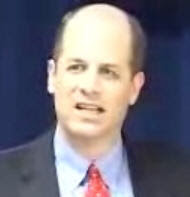
The Democrats' stonewall over the Waxman CPSIA Amendment continues unabated after the April 29th hearing. Do you think they were humming loudly while I gave testimony???
Anyhow, I am in possession of a memo from the House Republicans (led by Rep. Joe Barton, R-TX) discussing the state of the CPSIA "negotiation", such as it is:
"[Here] is the list of 'targeted areas' we sent last Tuesday [to Waxman's staff]. This is by no means a comprehensive list of topics we would like to eventually address, but it is the list of areas in which it may be possible to find compromise and that would greatly expand the sphere of relief to affected businesses of your size. To date, I am unaware of a response."
No response from Waxman. I guess this really isn't a big deal, huh?
At the very same time they are stonewalling progress, the Democrats are taking pains to portray the Republicans as "obstructionist". We have been hearing this for weeks. Recently, the Dems have even sunk to demanding that the victims of the law pressure the Republicans to fall in line. What a sad, sick twist in a very sorry tale. The memo continues:
"I want to emphasize to you how important a legislative fix is for Mr. Barton – he is not being 'obstructionist'. Over the last 18 months we sent numerous letters and verbal requests for a hearing at which people could share how CPSIA impacted their businesses and to hear suggestions on the best way to address the problems created by CPSIA. Those requests were sometimes ignored but always rebuffed until 2 weeks ago. Additionally, Mr. Barton and most of the E&C minority introduced a fix bill in March 2009, which the Majority refused to even discuss, let alone mark up. The Majority finally met with us in January to discuss CPSIA. At that meeting, we discussed those areas we believed needed to be addressed. We were told we had to work within the four corners of their legislative language. We acquiesced in an effort to see something accomplished and proceeded to discuss only ways to improve their proposed language. All of our requests, other than the concept of small business relief (I say 'concept' because we never discussed details, only that such relief would be necessary), were denied."
The Dems' fantastic accusation of Republican obstruction is meant to sucker you into believing that the Dems are your "friend" and the Republicans (notably Mr. Barton) are holding the democratic process hostage. This is certainly untrue on both accounts. The Dems hold a 13-seat majority on the House Energy and Commerce Committee and have demonstrated time and again their ability to pass bills without Republican support (think health care). The Republicans would LOVE IT if they had the capacity to obstruct . . . but they don't. Unless you think the Waxman Amendment and its utter disregard of your pain is some sort of gift, the notion of Dems' as "friend" does not compute.
Barton is out to fix the bill once and for all. Unfortunately, he is being limited in his approach by the even-intransigent Waxman: "Note, lowering the age to 7 years is not in the list below. That is off the negotiation table per the Majority staff, but they are aware this is a key point for our bosses and that they should expect an amendment should we get to markup. Narrowing the scope of this bill is the single most frequently heard recommendation from everyone on the affected spectrum, including some CPSC staff (though obviously not the Chairman). Of course, lowering the age is also the best way we can think of to ensure [small businesses] will find relief – our bosses are just not convinced there any “alternative testing methods” exist, and if there are, how affordable they may be or how quickly the CPSC can move to bless those methods. Further, we are concerned the CPSC is vulnerable to legal challenge if and when it makes such a determination, and without that determination, this bill gives no relief to any 'small batch manufacturer.' . . . I want to point out our main goal here is to make sure any legislative fix actually fixes the problems created with CPSIA. As a matter of principle, our bosses believe that no business should be left out in the cold by this bill." [Emphasis added]
I want to reiterate that there are NO alternative testing methods known to the CPSC that would assure compliance. NONE, ZIPPO, NADA. It's a scam that the Dems persist in propogating. The issue about legal challenge is yet another huge worry for those businesses dependent on REAL relief.
It is a relief to know SOMEONE is concerned to make sure you and I aren't left out in the cold. I think this bold political stance is downright heroic. Having fought basically full-time for 18 months, I have become accustomed to the cold shoulder from Democrats, as though I was some kind of criminal or some other kind of societal scum. Actually, I make educational products with a remarkable record of safety and compliance with law. The support from Barton and the Republicans is literally a godsend.
The Republican list of "asks" is not perfect, but it is practical and has good potential to help. It's not the optimal list, which they acknowledge, but it is a starting point for fixing a terrible law. The list is below for your review.
The Republicans deserve your support. They have also earned my thanks. With people like Joe Barton in the mix, there still is hope of real relief . . . someday. Henry Waxman, where are you?
"· Insert legislative language permitting the CPSC to grant exceptions for entire product categories. Current language permits exception for “a specific product or material” but does not permit the exclusion of an entire category (e.g., science equipment for schools, bikes, motorized recreation vehicles, or brass musical instruments).
· Direct the CPSC to act sua sponte to exclude categories of products based on least risk. E.g., leather saddles, golf clubs, microscopes or other science equipment, children’s ball point pens, musical instruments, etc. Timeline should be no later than the end of FY 2010 due to the February 2011 expiration of the stay on testing and certification. CPSC must also issue a notice of those products it will initially review for such exception.
· If the CPSC reviews a specific product petition and chooses to grant the petition, require the CPSC to grant a product category-wide exclusion unless significant safety concerns exist.
· Remove the ability to provide an expiration date on exclusions. If a product is proven to have no measurable adverse impact, it should be permitted for sale. Manufacturers require certainty for both the initial investment in a petition (estimates range from $25,000 to $50,000 per).
· Permit any “alternative testing” schemes blessed by CPSC to be used by any business. Alternatively, increase the size of businesses defined as “small batch manufacturers” under the bill.
· New standards added to the F-963 toy standard should, as a default, not be subject to [Third Party Testing]. The CPSC should have the discretionary authority to mandate either [Third Party Testing] or alternative testing methods, however.
· Eliminate the first two prongs of the exclusion standard. If an item is proven to have no measurable adverse impact (third prong), it will not matter if the item is designed to be/can be put in a child’s mouth (second prong), or if the item requires lead for a functional purpose (first prong)."
Tuesday, May 11, 2010


CPSIA - In Memory of Harrison Bergeron
One of my great frustrations with the CPSIA is its presumption that all children's product manufacturers are identical and none can be trusted to operate responsibly without vigorous government oversight. The CPSC, under the direction of the CPSIA and Congressional zealots from the Democratic Party, are developing identical safety and business administration processes for all businesses making children's products, notwithstanding an absence of data confirming hazards (think books, bikes, ATVs, pens, educational products). This lowest common denominator approach is one of the main sources of increased expense for businesses like ours. And, unfortunately, this offense of government intrusiveness adds no value to our safety efforts despite the self-congratulations of the Democrats leading the charge in Congress and at the CPSC.
Why don't I want to be like everyone else? Why don't I want the government to tell me how to run my business "better"? Of course, the CPSC has absolutely no idea how to effectively operate our business. Even more importantly, the CPSC's voluminous new rules misappropriate the value of our innovations and know-how. We taught ourselves how to efficiently assure the quality of our products - that's how we achieved our enviable safety record over a quarter century. The fact that we can do it at a low cost does not make us bad people - this is an economic advantage we should be entitled to capture and use. The CPSC has written rules to take that advantage away. This policy is un-American and profounding anti-small business. We are no longer able to compete with larger companies by being smarter or fleeter-of-foot.
By making everyone "equal" (forcing adoption of government-designed and government-approved procedures), Democrats like Inez Tenenbaum and Bob Adler now prohibit our company from prospering from hard work, innovation and investment in productivity and efficiency. The Dems' justification is that they know what's best for us and for all American consumers. Other than bravado, this assertion has no basis in fact. Even the very existence of the "crisis" they seek to avert (with our money) is very much in doubt.
If I am wrong, someone should show me DATA to prove it.
To protect the public from imaginary crises, our government just wants everyone to be equal. Kurt Vonnegut addressed this approach to government regulation in his dark short story "Harrison Bergeron". The set-up for the tragic story of Harrison Bergeron is simple - and familiar:
"THE YEAR WAS 2081, and everybody was finally equal. They weren't only equal before God and the law. They were equal every which way. Nobody was smarter than anybody else. Nobody was better looking than anybody else. Nobody was stronger or quicker than anybody else. All this equality was due to the 211th, 212th, and 213th Amendments to the Constitution, and to the unceasing vigilance of agents of the United States Handicapper General."
The CPSC seems eager to be our industry's U.S. Handicapper General, driven by the CPSIA and the Waxmanis.
In "Harrison Bergeron", all individuality has been eradicated by law. Those who by the grace of G-d or through their own efforts crafted some form of advantage were reduced to the lowest common denominator by the H-G. Resentment of successful people is called the Tall Poppy Syndrome in some countries. Ironically, people in the U.S. tend to admire the successful and seek to emulate them. The CPSIA takes an opposite tack - Mother Government knows best and safety innovation must be illegal. We need "standards". The Tall Poppies can't be trusted.
I hate to feel like Harrison Bergeron. The bad feelings sting all the worse because I know that the "crisis" is imaginary and has been coopted for political and populist advantage. This is an awful justification for destroying our lives' work. Even more demoralizing, we have already proven our expertise in supply chain management and quality control/compliance over many years. No matter. The CPSC knows best.
Something's VERY wrong here. Is it any wonder that there is anti-incumbency rage in this country now?
Why don't I want to be like everyone else? Why don't I want the government to tell me how to run my business "better"? Of course, the CPSC has absolutely no idea how to effectively operate our business. Even more importantly, the CPSC's voluminous new rules misappropriate the value of our innovations and know-how. We taught ourselves how to efficiently assure the quality of our products - that's how we achieved our enviable safety record over a quarter century. The fact that we can do it at a low cost does not make us bad people - this is an economic advantage we should be entitled to capture and use. The CPSC has written rules to take that advantage away. This policy is un-American and profounding anti-small business. We are no longer able to compete with larger companies by being smarter or fleeter-of-foot.
By making everyone "equal" (forcing adoption of government-designed and government-approved procedures), Democrats like Inez Tenenbaum and Bob Adler now prohibit our company from prospering from hard work, innovation and investment in productivity and efficiency. The Dems' justification is that they know what's best for us and for all American consumers. Other than bravado, this assertion has no basis in fact. Even the very existence of the "crisis" they seek to avert (with our money) is very much in doubt.
If I am wrong, someone should show me DATA to prove it.
To protect the public from imaginary crises, our government just wants everyone to be equal. Kurt Vonnegut addressed this approach to government regulation in his dark short story "Harrison Bergeron". The set-up for the tragic story of Harrison Bergeron is simple - and familiar:
"THE YEAR WAS 2081, and everybody was finally equal. They weren't only equal before God and the law. They were equal every which way. Nobody was smarter than anybody else. Nobody was better looking than anybody else. Nobody was stronger or quicker than anybody else. All this equality was due to the 211th, 212th, and 213th Amendments to the Constitution, and to the unceasing vigilance of agents of the United States Handicapper General."
The CPSC seems eager to be our industry's U.S. Handicapper General, driven by the CPSIA and the Waxmanis.
In "Harrison Bergeron", all individuality has been eradicated by law. Those who by the grace of G-d or through their own efforts crafted some form of advantage were reduced to the lowest common denominator by the H-G. Resentment of successful people is called the Tall Poppy Syndrome in some countries. Ironically, people in the U.S. tend to admire the successful and seek to emulate them. The CPSIA takes an opposite tack - Mother Government knows best and safety innovation must be illegal. We need "standards". The Tall Poppies can't be trusted.
I hate to feel like Harrison Bergeron. The bad feelings sting all the worse because I know that the "crisis" is imaginary and has been coopted for political and populist advantage. This is an awful justification for destroying our lives' work. Even more demoralizing, we have already proven our expertise in supply chain management and quality control/compliance over many years. No matter. The CPSC knows best.
Something's VERY wrong here. Is it any wonder that there is anti-incumbency rage in this country now?
Monday, May 10, 2010
CPSIA - Numbers Don't Lie (Update No. 1)
I have received a lot of feedback on my data on injuries from lead since I published it on Thursday. Some of the comments deserve further exploration.
a. Did anyone have this data previously? I think the answer is NO. I have heard from inside the CPSC that this kind of data analysis is not being done. The data is nowhere to be found, except here. Recent testimony by consumer advocates and Congressional zealots is strangely bereft of details, just long on invective. Don't we deserve better?
The hysteria over lead-in-paint recalls, combined with other recalls that were unrelated created such a lynch mob atmosphere in Congress that the only data that registered was data that supported the mob's POV. The actual data is therefore something of a surprise.
Let's look at the four reported lead injuries for a moment. The one death from lead, the famous incident in Minnesota where Jarnell Brown swallowed a lead charm off a Reebok bracelet, is well-known.
Injury no. 1: L.M. Becker recall (vending machine jewelry, Sept. 10, 2003): "The firm received one report of a child who swallowed the necklace's pendant, which reportedly resulted in high blood lead levels."
Injury no. 2: Four company recall (vending machine jewelry, July 8, 2004): "CPSC has received one report of lead poisoning when a child swallowed a piece of toy jewelry containing lead that was previously recalled. No reports of injury or illness have been received for the recalled products announced today." THIS REFERS TO THE L.M. BECKER "INJURY" ABOVE.
Injury no. 3: Munrie Furniture, Inc. (cribs and matching furniture, December 23, 2008): "Munrie has received one report of a child ingesting the paint. The child was diagnosed with lead poisoning."
Injury no. 4: Allreds Design (bracelets and clips, February 17, 2010): "Allreds Design received one report of a 10-month-old child who was treated by a physician for elevated lead levels."
Do these three injuries (one injury is double-counted) have anything in common? I assert that causation is not proven in these cases. Yes, lead poisoning is alleged, however there is no evidence that the cause has been determined definitively. READ what the CPSC said - the connection to the defective children's product is loose or even conjectural ("reportedly resulted in high blood lead levels"). Remember car seats that gave kids lead poisoning? Toxic car seats were a hoax. The injury data is flimsy at best. And this is all the evidence there is of injury from lead in children's products in the last 11 years of recalls.
The Democrats and consumer groups would rather eat broken glass that admit that the lead poisoning scare is a hoax. They want to run our businesses - so there's no conceding that all this economic damage cannot be traced to anything other than ONE TRAGIC ACCIDENT IN AN ELEVEN YEAR PERIOD. Uno, that's it, in our country of 300 million where thousands of kids die every year for various reasons.
Well, at least we know our companies will die in a valiant cause, to reduce the ten-year death rate from lead in children's products from one to zero . . . .
b. Was the CPSC really broken? This is Mr. Waxman's assertion, as expressed in his opening remarks at the April 29 hearing. So it must be true, right?
I hope to provide more data on this topic soon. In the meantime, I will simply pass along the comments of a friend who is in the CPSC community, namely that Congress underfunded the CPSC for 20 years, leading to severely constrained budgets and hiring. Consider these quotes from a 2007 Businessweek article about the CPSC:
"Yet while the CPSC has never been more vital, through much of its 33-year history the agency has been chronically understaffed and underfunded. Overseeing 400 recalls a year, most at companies' requests, the CPSC's compliance team has less time to initiate its own investigations, which tend to reveal the most serious risks. . . . Growing workload and shrinking resources have left many disheartened. From a peak of nearly 1,000 in 1980, CPSC's head count has fallen to 400. . . . What can be done to help the agency? In a word, money. It's been 17 years since Congress thoroughly reviewed the CPSC's resources and needs, says Nord."
So, let's see, Congress has been tightfisted with budgets for this little agency for many years, starving it of needed resources and headcount, effectively shrinking it over a 17-year period to a withered state, and then after an outbreak of large-scale toy recalls (by and large injury-free), Congress blames the agency for inattention to its mission and severely rewrites the law to punish the marketplace and the agency itself.
After all, why blame the entity responsible for the problem in the first place, Congress? Much easier to blame the agency!
c. Wow, those were a LOT of recalls? Is that the tip of the iceberg? As far as I can tell, the answer is that most of the iceberg is a mirage. Experienced CPSC hands note that the recall notices are prepared by the press office at the CPSC and are meant to attract attention and headlines. Big numbers, if defensible, are best suited to demonstrate that the cop is on the beat. A few tricks of the trade is to add in as many sources of "recalled" items as possible. I believe that as many as 60% (that's no typo) of all recalled units NEVER WERE SOLD. I would simply observe that if they were never sold, they never had the potential to cause injury.
Second, the population of recalled items is always inflated out of an abundance of caution whenever there is ANY doubt as to the identity of dangerous products. In other words, if a company sold one bad lot but also sold nine good lots, all indistinguishable, the recall would be announced for all ten lots, even though there is NO dispute that nine of the lots are absolutely fine.
Without this insight, recall statistics might be alarming, at least in a sense. Actually, the recalls are something of a mirage, an illusion of legions of bad products that really don't exist or were never sold. How can we verify this? Among other things, injury statistics back up this assertion. If we had 300 million units of dangerous products in circulation, the injury statistics of 2381 injuries in 11 years seems pretty low to me. Assuming an average time in the marketplace of three years per recalled item, this implies an annual injury rate of 0.026% (from all causes, not simply lead). If the products are in the market for only one year on average, the annual injury rate is still only 0.077%. In other words, in a worst case scenario, you can safely use RECALLED children's products 99.92% of the time. And you would presumably be even safer with NON-RECALLED products.
Oooo, scary.
Think of it this way: There are about 3 billion toys sold in the U.S. annually, according to Alan Hassenfeld, former CEO of Hasbro. Over 11 years, that 33 billion toys. [Considering that "Children's Products" includes far more than just toys, the pool of 11 years of sales is probably north of 500 billion units.] Were you to assume that all 899 recalls in my data were toys, the pool of 308 million units recalled would represent 0.93% of all toys sold in that period. So, if 0.93% is safe 99.92% of the time, and the rest presumably safe at a higher rate (let's say 99.999%), then the blended safety of all toys is 99.99%. The result is probably higher than that.
Numbers, numbers, do they matter?
We are spending not less than $5.6 billion per annum to "fix" this 99.99%+ safe problem. In an effort to create a much "safer" environment for kids, the helpful folks at the CPSC have produced literally thousands of pages of documents, rules and instructions to govern our businesses down to the tiniest detail. Unfortunately . . . the assertion that anyone will be safer CANNOT be proven as a matter of mathematics.
A neurotic bill administered by people who no longer can assess what is and is not safe is a danger to our society. The data proves it. Who should be held accountable? Congress? The Dems? Inez Tenenbaum? Some or all of the above.
a. Did anyone have this data previously? I think the answer is NO. I have heard from inside the CPSC that this kind of data analysis is not being done. The data is nowhere to be found, except here. Recent testimony by consumer advocates and Congressional zealots is strangely bereft of details, just long on invective. Don't we deserve better?
The hysteria over lead-in-paint recalls, combined with other recalls that were unrelated created such a lynch mob atmosphere in Congress that the only data that registered was data that supported the mob's POV. The actual data is therefore something of a surprise.
Let's look at the four reported lead injuries for a moment. The one death from lead, the famous incident in Minnesota where Jarnell Brown swallowed a lead charm off a Reebok bracelet, is well-known.
Injury no. 1: L.M. Becker recall (vending machine jewelry, Sept. 10, 2003): "The firm received one report of a child who swallowed the necklace's pendant, which reportedly resulted in high blood lead levels."
Injury no. 2: Four company recall (vending machine jewelry, July 8, 2004): "CPSC has received one report of lead poisoning when a child swallowed a piece of toy jewelry containing lead that was previously recalled. No reports of injury or illness have been received for the recalled products announced today." THIS REFERS TO THE L.M. BECKER "INJURY" ABOVE.
Injury no. 3: Munrie Furniture, Inc. (cribs and matching furniture, December 23, 2008): "Munrie has received one report of a child ingesting the paint. The child was diagnosed with lead poisoning."
Injury no. 4: Allreds Design (bracelets and clips, February 17, 2010): "Allreds Design received one report of a 10-month-old child who was treated by a physician for elevated lead levels."
Do these three injuries (one injury is double-counted) have anything in common? I assert that causation is not proven in these cases. Yes, lead poisoning is alleged, however there is no evidence that the cause has been determined definitively. READ what the CPSC said - the connection to the defective children's product is loose or even conjectural ("reportedly resulted in high blood lead levels"). Remember car seats that gave kids lead poisoning? Toxic car seats were a hoax. The injury data is flimsy at best. And this is all the evidence there is of injury from lead in children's products in the last 11 years of recalls.
The Democrats and consumer groups would rather eat broken glass that admit that the lead poisoning scare is a hoax. They want to run our businesses - so there's no conceding that all this economic damage cannot be traced to anything other than ONE TRAGIC ACCIDENT IN AN ELEVEN YEAR PERIOD. Uno, that's it, in our country of 300 million where thousands of kids die every year for various reasons.
Well, at least we know our companies will die in a valiant cause, to reduce the ten-year death rate from lead in children's products from one to zero . . . .
b. Was the CPSC really broken? This is Mr. Waxman's assertion, as expressed in his opening remarks at the April 29 hearing. So it must be true, right?
I hope to provide more data on this topic soon. In the meantime, I will simply pass along the comments of a friend who is in the CPSC community, namely that Congress underfunded the CPSC for 20 years, leading to severely constrained budgets and hiring. Consider these quotes from a 2007 Businessweek article about the CPSC:
"Yet while the CPSC has never been more vital, through much of its 33-year history the agency has been chronically understaffed and underfunded. Overseeing 400 recalls a year, most at companies' requests, the CPSC's compliance team has less time to initiate its own investigations, which tend to reveal the most serious risks. . . . Growing workload and shrinking resources have left many disheartened. From a peak of nearly 1,000 in 1980, CPSC's head count has fallen to 400. . . . What can be done to help the agency? In a word, money. It's been 17 years since Congress thoroughly reviewed the CPSC's resources and needs, says Nord."
So, let's see, Congress has been tightfisted with budgets for this little agency for many years, starving it of needed resources and headcount, effectively shrinking it over a 17-year period to a withered state, and then after an outbreak of large-scale toy recalls (by and large injury-free), Congress blames the agency for inattention to its mission and severely rewrites the law to punish the marketplace and the agency itself.
After all, why blame the entity responsible for the problem in the first place, Congress? Much easier to blame the agency!
c. Wow, those were a LOT of recalls? Is that the tip of the iceberg? As far as I can tell, the answer is that most of the iceberg is a mirage. Experienced CPSC hands note that the recall notices are prepared by the press office at the CPSC and are meant to attract attention and headlines. Big numbers, if defensible, are best suited to demonstrate that the cop is on the beat. A few tricks of the trade is to add in as many sources of "recalled" items as possible. I believe that as many as 60% (that's no typo) of all recalled units NEVER WERE SOLD. I would simply observe that if they were never sold, they never had the potential to cause injury.
Second, the population of recalled items is always inflated out of an abundance of caution whenever there is ANY doubt as to the identity of dangerous products. In other words, if a company sold one bad lot but also sold nine good lots, all indistinguishable, the recall would be announced for all ten lots, even though there is NO dispute that nine of the lots are absolutely fine.
Without this insight, recall statistics might be alarming, at least in a sense. Actually, the recalls are something of a mirage, an illusion of legions of bad products that really don't exist or were never sold. How can we verify this? Among other things, injury statistics back up this assertion. If we had 300 million units of dangerous products in circulation, the injury statistics of 2381 injuries in 11 years seems pretty low to me. Assuming an average time in the marketplace of three years per recalled item, this implies an annual injury rate of 0.026% (from all causes, not simply lead). If the products are in the market for only one year on average, the annual injury rate is still only 0.077%. In other words, in a worst case scenario, you can safely use RECALLED children's products 99.92% of the time. And you would presumably be even safer with NON-RECALLED products.
Oooo, scary.
Think of it this way: There are about 3 billion toys sold in the U.S. annually, according to Alan Hassenfeld, former CEO of Hasbro. Over 11 years, that 33 billion toys. [Considering that "Children's Products" includes far more than just toys, the pool of 11 years of sales is probably north of 500 billion units.] Were you to assume that all 899 recalls in my data were toys, the pool of 308 million units recalled would represent 0.93% of all toys sold in that period. So, if 0.93% is safe 99.92% of the time, and the rest presumably safe at a higher rate (let's say 99.999%), then the blended safety of all toys is 99.99%. The result is probably higher than that.
Numbers, numbers, do they matter?
We are spending not less than $5.6 billion per annum to "fix" this 99.99%+ safe problem. In an effort to create a much "safer" environment for kids, the helpful folks at the CPSC have produced literally thousands of pages of documents, rules and instructions to govern our businesses down to the tiniest detail. Unfortunately . . . the assertion that anyone will be safer CANNOT be proven as a matter of mathematics.
A neurotic bill administered by people who no longer can assess what is and is not safe is a danger to our society. The data proves it. Who should be held accountable? Congress? The Dems? Inez Tenenbaum? Some or all of the above.
Subscribe to:
Posts (Atom)


 Posts
Posts