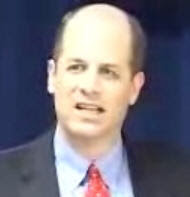
The sparks were certainly flying at the July 20th Commission meeting last week. With access finally granted by the CPSC today to the video footage, I was able to see for myself all the excitement at that storied meeting. I was amply rewarded with a display of regulatory arrogance you rarely see on tape - Inez Tenenbaum and Bob Adler standing tall and thumbing their noses at a binding Executive Order. I guess the CPSC is now above ALL law, other than laws endorsed by Henry Waxman.
The tension in the room at this meeting was palpable, and the usual shenanigans took place, like Ami Gadhia's claims that CPSC Staff found that manufacturers intentionally add lead to children's products (47:31). While I would normally take the scummy consumer group reps to task for their misstatements (lies?) and innuendo, in fact at this hearing, a much more important issue was "debated". [Bickered over is more like it.] Namely, whether the CPSC has to follow President Obama's Executive Order to preform cost-benefit analyses on regulations under the CPSIA. I have previously addressed this issue in blogposts on July 12, July 14, July 20 and July 21.
After the usual pointless sparring over the ability of the CPSC to do the right thing (don't worry, Bob Adler "agonized" over these difficult decisions . . . and then voted to screw industry), the meeting devolved into a series of often incoherent and inconsistent defensive rebuffs by Dems in support of their political conclusion that they can blow off the Executive Order to the extent that it threatens in any way their work implementing the CPSIA.
Of course, the idea of the Executive Order was to ensure that those rules are economically justified. Blah blah blah. The view of the Dem Commissioners is that evidence of the extreme economic impact of these rules is not relevant to the CPSIA rulemaking process, notwithstanding Mr. Obama's little note.
Chairman Tenenbaum laid down the law at 1:15 in the tape:
"I'd like to comment on the Executive Order [which says] 'Nothing in this order shall be construed to impair or otherwise affect authority granted by law to a department or agency, or the head thereof . . . . This order shall be implemented consistent with applicable law and subject to the availability of appropriations.' Congress was very clear. They wanted the lead limits at 600 then 300 then 100. We have looked at this from all angles. And I can tell you, consistent with the law, we have implemented the CPSIA. . . . Congress was very aware that we could not write regulations unless we did a Section 9 cost-benefit analysis in some of the statutes we implement. And they on purpose did not require us to do cost-benefit analysis because they realized the urgency of getting lead out of children's products. . . . And that my legal understanding. . . . And so to have this fiction be a part of this public hearing, that we are required to do cost-benefit analysis under the CPSIA under the Executive Order cannot go unanswered." [Emphasis added]
Take that, Obama! Your EO is fictional! Tenenbaum seems to be saying that because Congress permitted expedited rulemaking under the CPSIA, all regulations under CPSIA are shielded from any cost-benefit analysis mandated by the President. She pins this on the standards established under the CPSIA. Interestingly, she seems to overlook that the 100 ppm standard was subject to a rulemaking process, and the Obama order specifically addresses rulemakings. She also glosses over so many other rulemakings which are remote from the standards. Details, details. . . .
The Obama order instructs the CPSC to follow Executive Order 13563 to the extent "permitted" by law. The CPSIA does not preclude cost-benefit analysis, it only allowed the agency to skip it. The only direct reference to cost-benefit in the CPSIA is in Section 233 where cost-benefit analysis is specifically written out of the Poison Prevention Packaging Act of 1970. Cost-benefit analysis is NOT specifically written out of the CPSA in the CPSIA anywhere. The Dem Commissioners didn't address this point during the July 20th meeting.
EO 13563 in relevant part says: ". . . to the extent permitted by law, each agency must, among other things: (1) propose or adopt a regulation only upon a reasoned determination that its benefits justify its costs (recognizing that some benefits and costs are difficult to quantify); (2) tailor its regulations to impose the least burden on society, consistent with obtaining regulatory objectives, taking into account, among other things, and to the extent practicable, the costs of cumulative regulations; (3) select, in choosing among alternative regulatory approaches, those approaches that maximize net benefits (including potential economic, environmental, public health and safety, and other advantages, distributive impacts; and equity). . . ." The President's new EO applies this verbiage to the CPSC. Tenenbaum just blows it off entirely. The President must be below Henry Waxman.
Ms. T gets pretty snippy at points. "There are people on this Commission that want to contort and use this Executive Order. I have spoken to attorneys at the White House; I know I stand on firm legal ground. And so please don't leave this meeting thinking that we are expected to do cost-benefit analysis or this Executive Order mandates that we do that. It does not!"
Tenenbaum's argument - I am judge, I am jury, don't question me.
Anne Northup notes that the stalemate in Congress is no indication that the law requires such harsh and inflexible positions by the agency:
"It's also clear that Members of Congress . . . are universally talking about, even the authors of the bill, changes that ought to be made [to the CPSIA]. The reason that Congress has not acted is that [there is disagreement over how broadly to amend the law.] They have not told us that they think we should proceed in the most aggressive fashion and in the most punishing rulemakings and to take advantage of every opportunity we have to regulate more toys rather than less, more tests rather than less, and so forth. . . . All an Executive Order does is ask us to . . . take seriously whether or not we can find alternative ways of achieving the meaning of the law without the disruption in the economy."
Continuing the debate (argument), Bob Adler had much to say as usual. As we know, Bob Adler is already on record volunteering to block cost-benefit analysis with his dead body. [See "Is that a promise, Bob?"] At the July 20th meeting, he proffered the reason why cost-benefit analysis is inapplicable here:
"My colleague asked whether there is anything in the statute that specifically exempts us from having to, from being able to do cost-benefit, and I think in terms of the precise parsing of the statute, that's correct. But let's be clear: it effectively in all major respects precludes us from doing that. When they've given us 42 deadlines to achieve in just a very short period of time, when they've specifically exempted us from having to do these incredibly time-consuming and costly Section 9 procedures, i think there's a very clear message from Congress there. Congress in effect was saying 'We've done the cost-benefit analysis. Now we want you to implement the law."
So, the reason not to obey the President - Congress couldn't have meant us to do a cost-benefit analysis because otherwise they wouldn't have given us so much darned work to do. In addition, by reducing our burden with looser Section 9 procedures to expedite the implementation process, Adler says Congress meant to say that they had already "completed" a cost-benefit analysis. Mr. Adler does not attempt to prove his point, his assertion being enough apparently. I am always impressed by the self-justifications of regulators who claim to be able to read the "mind" of an inanimate body like Congress. In law school, they taught us to follow rules of legislative interpretation. That's so Old School! Nowadays you only have to attribute a "thought" to Congress to "prove" legislative intent.
Of course, just a few days ago, Bob asserted something rather different:
"It says "to the extent permitted by law" we should do cost-benefit analysis. And I just wanted to say over my dead body would I agree to do the kind of cost-benefit analysis that is contained in Section 9 of the [CPSA]. That is paralysis by analysis." [Emphasis added]
At that time, Adler seemed to believe that the words "to the extent permitted by law" require the agency to do a cost-benefit analysis only when it is convenient to perform such complex analyses. Hmmm. Does anyone think that legal analysis is just a bit "loose"?
Ah, but Bob wasn't done by any means. He carried on (and on and on) at the July 20th meeting to add yet another argument, namely that cost-benefit assessments are impossible as a practical matter. No explanation as to why this was relevant, as Adler already said Congress instructed the agency to not to do such analyses and the Executive Order is inapplicable. Details, details. . . .
"One of the things that I this is intriguing . . . is where they say 'Now when you're doing a cost-benefit analysis, let's address all the deficiencies we have identified with cost-benefit analyses in the past, namely you can always calculate the costs, especially the short term high costs but measuring benefits is just extraordinarily difficult.' How do you measure the life of a little baby? Because usually what they [conclude is that] there is no benefit . . . that you can quantify from saving a baby's life."
So, apparently, it might be okay to do cost-benefit analysis (?) but it wouldn't work. Congress must not have meant us to waste our time . . . . He later challenged anyone in the room to tell him what the "quantifiable benefits" of two lost IQ points are. Too bad the EPA wasn't there. They do that regularly. Here is a quote from AOL Energy referring to this kind of economic analysis: "The economic value of the IQ points and the benefits of reducing particulate pollution was estimated using 'long-standing, peer-reviewed' practices on the effect of regulations, [EPA] officials said." Again, details, details . . . .
Adler noted that this IQ point information would be crucial to an argument on how many angels could sit on the head of a pin. Thus, Mr. Adler sneers at the value and legitimacy of a cost-benefit analysis involving children. As our apparent judge, jury and overseer, one must surmise that he thinks it's his right to make this judgment, notwithstanding an Executive Order.
Oddly, Big Bob does concede that the picture is not quite so clear. Hmmm.
"I'm not arguing that because we've got a lot of work that Congress therefore said don't do cost-benefit analysis. [Editor's Note: Bob, in fact, that IS what you argued.] That isn't all they said. They said 'You know what we want you to do, we want you to do a Regulatory Flexibility Act analysis which is looking at the cost side of the ledger which is easier to calculate. In particular, to look at the cost side of the ledger insofar as affects small businesses because those are the folks who are the canaries in the mine that we look to." Adler goes on to retract this assertion, and return to his claim that Congress DIDN'T want the CPSC to do a RFA analysis and instead just wanted the agency to implement the law. His argument here seems to be that Congress was interested in some sort of economic analysis but only a limited one.
Adler then launches into his final jab at blowing off the Order:
"I guess we do have a dispute about whether we have imposed this in an ultra-aggressive way or in an extremely thoughtful way. I think we have taken the approach in an extremely thoughtful way. But sometimes you have to do a cost-benefit of whether to do a cost-benefit and I don't think that analysis gets us very far."
So Adler wraps up with his "over my dead body" argument - he just doesn't want to do it. Take that, Obama!
Nancy Nord grimly assessed the sad spectacle we witnessed:
"This is an important issue. And cost-benefit analysis could have been done with respect to our regulations under CPSIA but wasn't. Whether that's a good idea or a bad idea, we can continue to debate. But Congress did not say not to do it - Majority did. And I think that's unfortunate and I think our rules have suffered because of that."
I will spare you the late sniping between Tenenbaum and Nord, but if you like catty repartee, it's at 1:24.
With three Dem Commissioners in charge at the CPSC, you can forget about relief from the EO. Nice try, Mr. President, but you've met your match. Tenenbaum, Adler and Moore are above the law and are on a Waxman mission that transcends our laws and the Constitution. There's not much left to hope for with this crew in charge.
Maybe the CPSC will be on the national debt chopping block. Don't hold your breath. . . .
Showing posts with label Executive Orders. Show all posts
Showing posts with label Executive Orders. Show all posts
Tuesday, July 26, 2011


Thursday, July 21, 2011
CPSIA - What Exactly Happened at the July 20th CPSC Commission Meeting?
What happened on July 20th at the CPSC Commission hearing? I wish I knew. We must rely on a BNA article and gossip from those who were present or happened to be wasting their morning watching the spectacle live online. Apparently Inez Tenenbaum made some blanket statements rejecting the President's Executive Order of July 11 relating to cost-benefit analysis of provisions of the CPSIA.
Of course, how would I know what she said? The video at the Sunshine State of the CPSC is not available to me. Two days later . . . . Hmmm. Do you think they are waiting for me to forget about it???
While I cannot tell you exactly what Ms. Tenenbaum said during the meeting (yet), I do know a couple things. First, BNA in an article entitled "CPSIA: Discord Between CPSC Commissioners Comes to Head but Fails to Halt Productivity" dated July 20 quoted Ms. T as follows:
"And in a July 20 public meeting on the agency's priorities for 2013, Tenenbaum felt the need to say to Northup and other critics of the commission that the rules under the CPSIA are exempt from cost/benefit analyses, and therefore the agency is not required do them. 'To have this fiction that we are required to do cost/benefit analysis under CPSIA cannot go unaddressed.' She said CPSC has committed to conducting a retrospective review of its regulations, per Obama's Executive Order, and 'we will begin our retrospective review and we will solicit comment.'" [Emphasis added]
Fiction, eh? Ms. T also made the same point in her statement on the newly adopted 100 ppm lead standard:
"Despite our clear and strict statutory instructions on this issue, some of my colleagues have raised a concern that the Commission’s actions run contrary to an Executive Order issued by President Barack Obama on July 11, 2011. Their position is not correct. In that Order, the President has asked independent agencies, to the extent permitted by law, to make decisions only after taking into account several considerations, but also to remain true to their statutory mandates. I am confident that the Commission has met and exceeded its mandate under the CPSIA. As such, the decision reached by the Commission today is consistent with the President’s Executive Order, because we have followed the law as mandated in the CPSIA, and as clearly intended by its Congressional authors." [Emphasis added]
Ms. T seems to be saying that the agency was not permitted to follow the Executive Order because this setting of standards is not a "regulation" but is instead a "statutory mandate". There is no such thing as a "mandate" in this context from a legal point of view. See the definition of "mandate". Essentially, what the regulators are referring to as a "mandate" is the directive by Congress to take certain steps and exercise judgment coupled with a public inquiry process, meaning that it must be a well-informed process taking into account the feedback of interested stakeholders.
[It's okay, let it out. I just doubled over in laughter myself.]
What DID Congress tell the CPSC to do about 100 ppm in the CPSIA? The law instructs the CPSC as follows:
Section 101(a)(2)(C): "100 PARTS PER MILLION.—Except as provided in subparagraphs (D) and (E), beginning on the date that is 3 years after the date of enactment of this Act, subparagraph (B) shall be applied by substituting ‘100 parts per million’ for ‘300 parts per million’ unless the Commission determines that a limit of 100 parts per million is not technologically feasible for a product or product category. The Commission may make such a determination only after notice and a hearing and after analyzing the public health protections associated with substantially reducing lead in children’s products."
Section 101(a)(2)(D): "ALTERNATE REDUCTION OF LIMIT.—If the Commission determines under subparagraph (C) that the 100 parts per million limit is not technologically feasible for a product or product category, the Commission shall, by regulation, establish an amount that is the lowest amount of lead, lower than 300 parts per million, the Commission determines to be technologically feasible to achieve for that product or product category. The amount of lead established by the Commission under the preceding sentence shall be substituted for the 300 parts per million limit under subparagraph (B) beginning on the date that is 3 years after the date of enactment of this Act."
Section 101(e): "PENDING RULEMAKING PROCEEDINGS TO HAVE NO EFFECT— The pendency of a rulemaking proceeding to consider— (1) a delay in the effective date of a limit or an alternate limit under this section related to technological feasibility . . . shall not delay the effect of any provision or limit under this section nor shall it stay general enforcement of the requirements of this section."
[Emphasis added] Section 101(e) refers to the process that just concluded as a "rulemaking proceeding". I don't know how you feel about this, but this section of the CPSIA sure sounds like an instruction to administer a rulemaking proceeding to me. This is not a direction to reach a particular conclusion - if it is a "mandate" at all, it is a "mandate" to go through a classic regulatory process. Read the instructions yourself, it's right there.
President Obama's Executive Order reads as follows (in relevant part):
"By the authority vested in me as President by the Constitution and the laws of the United States of America, and in order to improve regulation and regulatory review, it is hereby ordered as follows: Executive Order 13563 of January 18, 2011, 'Improving Regulation and Regulatory Review,' directed to executive agencies, was meant to produce a regulatory system that protects 'public health, welfare, safety, and our environment while promoting economic growth, innovation, competitiveness, and job creation.' Independent regulatory agencies, no less than executive agencies, should promote that goal. . . . Executive Order 13563 set out general requirements directed to executive agencies concerning public participation, integration and innovation, flexible approaches, and science. To the extent permitted by law, independent regulatory agencies should comply with these provisions as well." [Emphasis added]
Ms. T interpreted the words "to the extent permitted by law" as "to remain true to their statutory mandates". Ms. T, a lawyer, is blatantly wrong, laughably so. Unfortunately, it's not funny.
Ms. Tenenbaum has taken the position that cost-benefit analysis is not relevant to the CPSIA. Of course, you know I think that's a bunch of bunk. The President's Executive Order is plainly applicable to this rulemaking process and Tenenbaum may be daring you or me to sue her. I would like to point out, however, that when rules of legislative interpretation are applied to the CPSIA, her shoddy legal conclusions look even worse.
Does the CPSIA mention "cost-benefit" anywhere? I am glad you asked . . . . The CPSIA uses the term "cost-benefit" only once (outside of the Table of Contents):
"SEC. 233. COST-BENEFIT ANALYSIS UNDER THE POISON PREVENTION PACKAGING ACT OF 1970. Section 3 of the Poison Prevention Packaging Act of 1970 (15 U.S.C. 1472) is amended by adding at the end thereof the following: ‘(e) Nothing in this Act shall be construed to require the Consumer Product Safety Commission, in establishing a standard under this section, to prepare a comparison of the costs that would be incurred in complying with such standard with the benefits of such standard.'"
If Congress was so concerned that cost-benefit should never apply to these provisions, why didn't they say it? They weren't silent on cost-benefit - Congress thought enough of the issue to mention it in context of the Poison Prevention Packaging Act of 1970. But as it relates to lead and phthalates, Congress was silent on cost-benefit. Why might they have been silent? Perhaps the authors of the law believed it was an illegal provision as applied to these rules. Perhaps the Dems behind the law felt the CPSIA wouldn't pass if such an obnoxious term were included in this critical part of the law. Perhaps those people figured no one would call their bluff, and that later, politically-aligned appointees would simply make up the law the authors couldn't write themselves.
As this week's WSJ Editorial implies, we are powerless to stop Tenenbaum, Adler and Moore. They can run rampant over our laws, our companies, our markets, our jobs, our lives. They are the law, they are the judges, they are the jury. They know what's best for us, and no public hearings are going to change their minds.
Oops, make that no Presidential Executive Order will change their minds . . . .
Of course, how would I know what she said? The video at the Sunshine State of the CPSC is not available to me. Two days later . . . . Hmmm. Do you think they are waiting for me to forget about it???
While I cannot tell you exactly what Ms. Tenenbaum said during the meeting (yet), I do know a couple things. First, BNA in an article entitled "CPSIA: Discord Between CPSC Commissioners Comes to Head but Fails to Halt Productivity" dated July 20 quoted Ms. T as follows:
"And in a July 20 public meeting on the agency's priorities for 2013, Tenenbaum felt the need to say to Northup and other critics of the commission that the rules under the CPSIA are exempt from cost/benefit analyses, and therefore the agency is not required do them. 'To have this fiction that we are required to do cost/benefit analysis under CPSIA cannot go unaddressed.' She said CPSC has committed to conducting a retrospective review of its regulations, per Obama's Executive Order, and 'we will begin our retrospective review and we will solicit comment.'" [Emphasis added]
Fiction, eh? Ms. T also made the same point in her statement on the newly adopted 100 ppm lead standard:
"Despite our clear and strict statutory instructions on this issue, some of my colleagues have raised a concern that the Commission’s actions run contrary to an Executive Order issued by President Barack Obama on July 11, 2011. Their position is not correct. In that Order, the President has asked independent agencies, to the extent permitted by law, to make decisions only after taking into account several considerations, but also to remain true to their statutory mandates. I am confident that the Commission has met and exceeded its mandate under the CPSIA. As such, the decision reached by the Commission today is consistent with the President’s Executive Order, because we have followed the law as mandated in the CPSIA, and as clearly intended by its Congressional authors." [Emphasis added]
Ms. T seems to be saying that the agency was not permitted to follow the Executive Order because this setting of standards is not a "regulation" but is instead a "statutory mandate". There is no such thing as a "mandate" in this context from a legal point of view. See the definition of "mandate". Essentially, what the regulators are referring to as a "mandate" is the directive by Congress to take certain steps and exercise judgment coupled with a public inquiry process, meaning that it must be a well-informed process taking into account the feedback of interested stakeholders.
[It's okay, let it out. I just doubled over in laughter myself.]
What DID Congress tell the CPSC to do about 100 ppm in the CPSIA? The law instructs the CPSC as follows:
Section 101(a)(2)(C): "100 PARTS PER MILLION.—Except as provided in subparagraphs (D) and (E), beginning on the date that is 3 years after the date of enactment of this Act, subparagraph (B) shall be applied by substituting ‘100 parts per million’ for ‘300 parts per million’ unless the Commission determines that a limit of 100 parts per million is not technologically feasible for a product or product category. The Commission may make such a determination only after notice and a hearing and after analyzing the public health protections associated with substantially reducing lead in children’s products."
Section 101(a)(2)(D): "ALTERNATE REDUCTION OF LIMIT.—If the Commission determines under subparagraph (C) that the 100 parts per million limit is not technologically feasible for a product or product category, the Commission shall, by regulation, establish an amount that is the lowest amount of lead, lower than 300 parts per million, the Commission determines to be technologically feasible to achieve for that product or product category. The amount of lead established by the Commission under the preceding sentence shall be substituted for the 300 parts per million limit under subparagraph (B) beginning on the date that is 3 years after the date of enactment of this Act."
Section 101(e): "PENDING RULEMAKING PROCEEDINGS TO HAVE NO EFFECT— The pendency of a rulemaking proceeding to consider— (1) a delay in the effective date of a limit or an alternate limit under this section related to technological feasibility . . . shall not delay the effect of any provision or limit under this section nor shall it stay general enforcement of the requirements of this section."
[Emphasis added] Section 101(e) refers to the process that just concluded as a "rulemaking proceeding". I don't know how you feel about this, but this section of the CPSIA sure sounds like an instruction to administer a rulemaking proceeding to me. This is not a direction to reach a particular conclusion - if it is a "mandate" at all, it is a "mandate" to go through a classic regulatory process. Read the instructions yourself, it's right there.
President Obama's Executive Order reads as follows (in relevant part):
"By the authority vested in me as President by the Constitution and the laws of the United States of America, and in order to improve regulation and regulatory review, it is hereby ordered as follows: Executive Order 13563 of January 18, 2011, 'Improving Regulation and Regulatory Review,' directed to executive agencies, was meant to produce a regulatory system that protects 'public health, welfare, safety, and our environment while promoting economic growth, innovation, competitiveness, and job creation.' Independent regulatory agencies, no less than executive agencies, should promote that goal. . . . Executive Order 13563 set out general requirements directed to executive agencies concerning public participation, integration and innovation, flexible approaches, and science. To the extent permitted by law, independent regulatory agencies should comply with these provisions as well." [Emphasis added]
Ms. T interpreted the words "to the extent permitted by law" as "to remain true to their statutory mandates". Ms. T, a lawyer, is blatantly wrong, laughably so. Unfortunately, it's not funny.
Ms. Tenenbaum has taken the position that cost-benefit analysis is not relevant to the CPSIA. Of course, you know I think that's a bunch of bunk. The President's Executive Order is plainly applicable to this rulemaking process and Tenenbaum may be daring you or me to sue her. I would like to point out, however, that when rules of legislative interpretation are applied to the CPSIA, her shoddy legal conclusions look even worse.
Does the CPSIA mention "cost-benefit" anywhere? I am glad you asked . . . . The CPSIA uses the term "cost-benefit" only once (outside of the Table of Contents):
"SEC. 233. COST-BENEFIT ANALYSIS UNDER THE POISON PREVENTION PACKAGING ACT OF 1970. Section 3 of the Poison Prevention Packaging Act of 1970 (15 U.S.C. 1472) is amended by adding at the end thereof the following: ‘(e) Nothing in this Act shall be construed to require the Consumer Product Safety Commission, in establishing a standard under this section, to prepare a comparison of the costs that would be incurred in complying with such standard with the benefits of such standard.'"
If Congress was so concerned that cost-benefit should never apply to these provisions, why didn't they say it? They weren't silent on cost-benefit - Congress thought enough of the issue to mention it in context of the Poison Prevention Packaging Act of 1970. But as it relates to lead and phthalates, Congress was silent on cost-benefit. Why might they have been silent? Perhaps the authors of the law believed it was an illegal provision as applied to these rules. Perhaps the Dems behind the law felt the CPSIA wouldn't pass if such an obnoxious term were included in this critical part of the law. Perhaps those people figured no one would call their bluff, and that later, politically-aligned appointees would simply make up the law the authors couldn't write themselves.
As this week's WSJ Editorial implies, we are powerless to stop Tenenbaum, Adler and Moore. They can run rampant over our laws, our companies, our markets, our jobs, our lives. They are the law, they are the judges, they are the jury. They know what's best for us, and no public hearings are going to change their minds.
Oops, make that no Presidential Executive Order will change their minds . . . .
Wednesday, July 20, 2011
CPSIA - WSJ's NINTH EDITORIAL Opposing the CPSIA
REVIEW & OUTLOOK
JULY 20, 2011
Toying With Deregulation
Another agency ignores Mr. Obama's executive order.
Here's a question for White House regulatory czar Cass Sunstein: Do Presidential executive orders mean anything? Only last week President Obama asked independent agencies to examine existing rules and get rid of the duds, but nobody is listening.
Within days of the executive order, the Consumer Product Safety Commission voted 3-2 that it is "technologically feasible" to impose a lower limit on lead content in children's products, reducing the level to 100 parts per million from 300 parts per million. The new limit, which will go into effect August 14, will mean one more round of hair-pulling for small business owners who will have to change their manufacturing processes and junk existing products that don't meet the new standard. The three votes in favor came from Mr. Obama's chairwoman Inez Tenenbaum and two other Democratic commissioners.
The Consumer Product Safety Improvement Act passed in 2008 in a frenzy of concern over lead content in toys from China, and it has since tormented anyone who makes or sells bicycles, books, children's jewelry and so much more. Its strictures have imposed costs for testing, recalls and other inconveniences without any reasonable correlation to the risks to children. "No sweetheart, don't eat that bicycle!"
According to the CPSC, the plan to require that products be 99.99% lead free is reasonable because manufacturers would still be able to find materials and because some products already comply. While the additional safety gain will be negligible, the change will do damage in other ways, causing companies to avoid recycled metal and plastic, which may contain higher amounts of lead. It will also raise costs for metal parts, potentially driving some businesses to substitute plastic for metal, or stop producing children's products. In the bicycle industry, a quarter of manufacturers have stopped making kids bikes.
Instead of fixing its manifest flaws, Congressional Democrats who wrote the law have shrugged off small business complaints and opposed any changes. Energy and Commerce Chairman Fred Upton and Commerce, Manufacturing and Trade Subcommittee Chair Mary Bono Mack introduced reforms earlier this year that would revise the law and give the CPSC greater authority to make regulation decisions based on actual risk. The bill is waiting for a mark-up at full committee but any reprieve would likely come too late for businesses facing the mid-August deadline.
Mr. Obama's recent executive order is voluntary, but the President told agency heads that getting rid of red tape was an opportunity to "forge a 21st-century regulatory system that makes our economy stronger and more competitive." Perhaps Mr. Sunstein will tell toy makers it's the thought that counts.
JULY 20, 2011
Toying With Deregulation
Another agency ignores Mr. Obama's executive order.
Here's a question for White House regulatory czar Cass Sunstein: Do Presidential executive orders mean anything? Only last week President Obama asked independent agencies to examine existing rules and get rid of the duds, but nobody is listening.
Within days of the executive order, the Consumer Product Safety Commission voted 3-2 that it is "technologically feasible" to impose a lower limit on lead content in children's products, reducing the level to 100 parts per million from 300 parts per million. The new limit, which will go into effect August 14, will mean one more round of hair-pulling for small business owners who will have to change their manufacturing processes and junk existing products that don't meet the new standard. The three votes in favor came from Mr. Obama's chairwoman Inez Tenenbaum and two other Democratic commissioners.
The Consumer Product Safety Improvement Act passed in 2008 in a frenzy of concern over lead content in toys from China, and it has since tormented anyone who makes or sells bicycles, books, children's jewelry and so much more. Its strictures have imposed costs for testing, recalls and other inconveniences without any reasonable correlation to the risks to children. "No sweetheart, don't eat that bicycle!"
According to the CPSC, the plan to require that products be 99.99% lead free is reasonable because manufacturers would still be able to find materials and because some products already comply. While the additional safety gain will be negligible, the change will do damage in other ways, causing companies to avoid recycled metal and plastic, which may contain higher amounts of lead. It will also raise costs for metal parts, potentially driving some businesses to substitute plastic for metal, or stop producing children's products. In the bicycle industry, a quarter of manufacturers have stopped making kids bikes.
Instead of fixing its manifest flaws, Congressional Democrats who wrote the law have shrugged off small business complaints and opposed any changes. Energy and Commerce Chairman Fred Upton and Commerce, Manufacturing and Trade Subcommittee Chair Mary Bono Mack introduced reforms earlier this year that would revise the law and give the CPSC greater authority to make regulation decisions based on actual risk. The bill is waiting for a mark-up at full committee but any reprieve would likely come too late for businesses facing the mid-August deadline.
Mr. Obama's recent executive order is voluntary, but the President told agency heads that getting rid of red tape was an opportunity to "forge a 21st-century regulatory system that makes our economy stronger and more competitive." Perhaps Mr. Sunstein will tell toy makers it's the thought that counts.
Wednesday, July 13, 2011
CPSIA - Alliance for Children's Product Safety Reacts to 100 ppm Decision
The Alliance for Children's Product Safety, a coalition of small business owners, manufacturers, crafters and entrepreneurs who are impacted by the Consumer Product Safety Improvement Act (CPSIA), issued the following statement regarding the CPSC's passage of the 100 ppm for lead content rule today by a vote of 3-2.
"Today, just three days after President Obama issued an Executive Order instructing the CPSC and other independent agencies to examine all rules for ineffective and unnecessary burdens and instructed the agency that decisions should be made only after consideration of the costs and benefits of new regulations, the CPSC enacted yet another costly rule that will do nothing to improve product safety but will cause further job losses in the children’s product market. The CPSC has already acknowledged that businesses will not be able to meet the 100 ppm lead standard without cost and disruption, and that consistent compliance with the new standard will be nearly impossible due to material and inter-lab variability and regulatory uncertainty. Most importantly, overwhelming costs imposed by the new standard will disproportionately affect smaller companies. On the other side of the ledger, the CPSC admits the health benefits of the new standard will be 'minimal'.
President Obama's Executive Order states 'Wise regulatory decisions depend on public participation and on careful analysis of the likely consequences of regulation. . . . To the extent permitted by law, such decisions should be made only after consideration of their costs and benefits (both quantitative and qualitative).' The President’s order notes the duty of the CPSC to regulate for public health and safety 'while promoting economic growth, innovation, competitiveness, and job creation.' The new rule fails Mr. Obama’s test.
It is disappointing that the majority of CPSC Commissioners ignored the explicit terms of the President’s order governing regulatory excess. The 100 ppm standard is a prime example of the economic self-destruction caused by the CPSIA: the imposition of costly and burdensome regulations that don’t improve product safety. It is now up to Congress to fix the numerous 'unintended consequences' of the CPSIA before more small businesses are forced to go out of businesses and more jobs are lost."
The Alliance for Children's Product Safety, Chaired by Rick Woldenberg, is a coalition of small business owners, manufacturers, crafters and entrepreneurs who are impacted by the Consumer Product Safety Improvement Act (CPSIA). For additional information, please visit www.AmendTheCPSIA.com or contact Caitlin Andrews at 202-828-7637.
"Today, just three days after President Obama issued an Executive Order instructing the CPSC and other independent agencies to examine all rules for ineffective and unnecessary burdens and instructed the agency that decisions should be made only after consideration of the costs and benefits of new regulations, the CPSC enacted yet another costly rule that will do nothing to improve product safety but will cause further job losses in the children’s product market. The CPSC has already acknowledged that businesses will not be able to meet the 100 ppm lead standard without cost and disruption, and that consistent compliance with the new standard will be nearly impossible due to material and inter-lab variability and regulatory uncertainty. Most importantly, overwhelming costs imposed by the new standard will disproportionately affect smaller companies. On the other side of the ledger, the CPSC admits the health benefits of the new standard will be 'minimal'.
President Obama's Executive Order states 'Wise regulatory decisions depend on public participation and on careful analysis of the likely consequences of regulation. . . . To the extent permitted by law, such decisions should be made only after consideration of their costs and benefits (both quantitative and qualitative).' The President’s order notes the duty of the CPSC to regulate for public health and safety 'while promoting economic growth, innovation, competitiveness, and job creation.' The new rule fails Mr. Obama’s test.
It is disappointing that the majority of CPSC Commissioners ignored the explicit terms of the President’s order governing regulatory excess. The 100 ppm standard is a prime example of the economic self-destruction caused by the CPSIA: the imposition of costly and burdensome regulations that don’t improve product safety. It is now up to Congress to fix the numerous 'unintended consequences' of the CPSIA before more small businesses are forced to go out of businesses and more jobs are lost."
The Alliance for Children's Product Safety, Chaired by Rick Woldenberg, is a coalition of small business owners, manufacturers, crafters and entrepreneurs who are impacted by the Consumer Product Safety Improvement Act (CPSIA). For additional information, please visit www.AmendTheCPSIA.com or contact Caitlin Andrews at 202-828-7637.
CPSIA - Hey Republicans, You Aren't Allowed to Think!
During the July 7th House Energy and Commerce Committee's Oversight Subcommittee hearing on regulatory reform among independent agencies (a hearing which presumably prompted Obama's Executive Order two business days later), Ranking Member Diana DeGette (D-CO) trotted out one of the most common arguments against change:
"I want to talk . . . about the recent proposals on the other side of the aisle that would undermine the Consumer Product Safety Commission and some of the other good work that they've done. Three years ago, this Committee and this Congress worked hard in a significantly bipartisan manner to put meaningful reforms for consumers into the [CPSIA]. This has yielded unbelievable benefits. . . . So I think it's important to know this, that these reforms were worked out by this Committee in one of the last great efforts that was completely bipartisan. We should embrace that."
This is a familiar argument by Dems. The law passed almost unanimously, guys, so it's wrong to try to change the law now.
What logical point is DeGette making here? How is this argument supposed to persuade us?
At first, I thought the Dems were simply arguing the infallibility of Congress. Congress never errs, so how can we doubt something every Congressman voted for? Congress is all-knowing and cannot pass a bill without doing the right thing. [And as Obamacare indicates, Congress apparently doesn't even need to read the bills to get them right.]
To argue that this law is a product of infallible judgment is quite a leap. Even the unanimity of the law hardly explains the mental state of Congress at the time. Congress was ANGRY. Have you ever said or done anything in anger you later regretted? 'Nuf said.
No, an infallible Congress cannot be what Ms. DeGette is pushing. Actually, I think it's far simpler. She is saying that the Dems were right and are still right and have no need or interest in changing their position. She points out that the two parties agreed on the law's text in 2008 and passed it almost unanimously. Now the Republicans want to make serious changes. She says the Republicans should return to their bipartisan brothers, the Dems, and support the work they did three years ago. She essentially calls into question the motivation of the Republicans in opposing the Dems now, suggesting that this is a by-product of a broken Washington, where partisan posturing is all we can expect from these people.
At the heart of her reasoning is the fact that the Dems are holding their course behind the law, and the Republicans have moved, and now she wants the Republicans to be more "bipartisan" by returning dutifully to agreement with the unwavering Dems. Or is it the intransigent Dems? A matter of perspective, I suppose. Come back to the fold with the Dems! DeGette's argument relieves the Dems of any obligation to reconsider ANYTHING. How convenient. How Waxman-like.
Here's something the Dems won't tell you - the law was jammed down the throats of the Republicans in both Houses of Congress. Congress was controlled by Nancy Pelosi at the time (she of San Francisco, of course). The CPSIA was purpose-built for getting Democrats elected and was not negotiated with the Republicans in any sense you would recognize. On the national stage, the Obama wave was cresting at that time, too, so what do you think the political calculation was in the Bush White House and in the Minority ranks in either House on the CPSIA? The Republicans knew that any opposition to any aspect of this law, regardless of how awful, would mean attack TV commercials on support for children's safety at a time of great electoral vulnerability. Bush agreed to sign the bill to protect his party, not to protect kids. At least it neutralized a possibly existential political threat. Each Republican Congressman or Senator had to make a similar political calculation. Only four people (Ron Paul and three Senators) were politically courageous enough to stand up against this excessive bill. It is certain that far more than four members of Congress found fault with the CPSIA at the time.
The 2008 "great bipartisan effort" that DeGette romanticizes is an urban legend, a fiction, a fairy tale, a story. She wants to cow the Republicans into losing their political nerve at this critical juncture when some kind of momentum behind our position may actually be growing. She wants them to think ballot box.
And for those of you who pepper me with defense of Dems or reminders of past Republican "sins", all I can say is this: the Republicans have nothing to gain politically from their three-year effort to right this wrong. They are taking electoral risks to help us, and have been unwavering in their support of our mission. I can only believe that this is because they actually are trying to do the right thing. This has never been about policy or safety. The Republicans know that this issue has been played for political gain by the Dems with no remorse over the devastation they have wrought to your businesses, your markets or job creation. For them, it's just too juicy an opportunity to get reelected. And if that's so, it must be the reverse for the Republicans. The Republicans are taking this risk on your behalf, for your benefit.
I hope there's a nice occasion to say "thank you". In the meantime, the likes of Diana DeGette must be vanquished.
"I want to talk . . . about the recent proposals on the other side of the aisle that would undermine the Consumer Product Safety Commission and some of the other good work that they've done. Three years ago, this Committee and this Congress worked hard in a significantly bipartisan manner to put meaningful reforms for consumers into the [CPSIA]. This has yielded unbelievable benefits. . . . So I think it's important to know this, that these reforms were worked out by this Committee in one of the last great efforts that was completely bipartisan. We should embrace that."
This is a familiar argument by Dems. The law passed almost unanimously, guys, so it's wrong to try to change the law now.
What logical point is DeGette making here? How is this argument supposed to persuade us?
At first, I thought the Dems were simply arguing the infallibility of Congress. Congress never errs, so how can we doubt something every Congressman voted for? Congress is all-knowing and cannot pass a bill without doing the right thing. [And as Obamacare indicates, Congress apparently doesn't even need to read the bills to get them right.]
To argue that this law is a product of infallible judgment is quite a leap. Even the unanimity of the law hardly explains the mental state of Congress at the time. Congress was ANGRY. Have you ever said or done anything in anger you later regretted? 'Nuf said.
No, an infallible Congress cannot be what Ms. DeGette is pushing. Actually, I think it's far simpler. She is saying that the Dems were right and are still right and have no need or interest in changing their position. She points out that the two parties agreed on the law's text in 2008 and passed it almost unanimously. Now the Republicans want to make serious changes. She says the Republicans should return to their bipartisan brothers, the Dems, and support the work they did three years ago. She essentially calls into question the motivation of the Republicans in opposing the Dems now, suggesting that this is a by-product of a broken Washington, where partisan posturing is all we can expect from these people.
At the heart of her reasoning is the fact that the Dems are holding their course behind the law, and the Republicans have moved, and now she wants the Republicans to be more "bipartisan" by returning dutifully to agreement with the unwavering Dems. Or is it the intransigent Dems? A matter of perspective, I suppose. Come back to the fold with the Dems! DeGette's argument relieves the Dems of any obligation to reconsider ANYTHING. How convenient. How Waxman-like.
Here's something the Dems won't tell you - the law was jammed down the throats of the Republicans in both Houses of Congress. Congress was controlled by Nancy Pelosi at the time (she of San Francisco, of course). The CPSIA was purpose-built for getting Democrats elected and was not negotiated with the Republicans in any sense you would recognize. On the national stage, the Obama wave was cresting at that time, too, so what do you think the political calculation was in the Bush White House and in the Minority ranks in either House on the CPSIA? The Republicans knew that any opposition to any aspect of this law, regardless of how awful, would mean attack TV commercials on support for children's safety at a time of great electoral vulnerability. Bush agreed to sign the bill to protect his party, not to protect kids. At least it neutralized a possibly existential political threat. Each Republican Congressman or Senator had to make a similar political calculation. Only four people (Ron Paul and three Senators) were politically courageous enough to stand up against this excessive bill. It is certain that far more than four members of Congress found fault with the CPSIA at the time.
The 2008 "great bipartisan effort" that DeGette romanticizes is an urban legend, a fiction, a fairy tale, a story. She wants to cow the Republicans into losing their political nerve at this critical juncture when some kind of momentum behind our position may actually be growing. She wants them to think ballot box.
And for those of you who pepper me with defense of Dems or reminders of past Republican "sins", all I can say is this: the Republicans have nothing to gain politically from their three-year effort to right this wrong. They are taking electoral risks to help us, and have been unwavering in their support of our mission. I can only believe that this is because they actually are trying to do the right thing. This has never been about policy or safety. The Republicans know that this issue has been played for political gain by the Dems with no remorse over the devastation they have wrought to your businesses, your markets or job creation. For them, it's just too juicy an opportunity to get reelected. And if that's so, it must be the reverse for the Republicans. The Republicans are taking this risk on your behalf, for your benefit.
I hope there's a nice occasion to say "thank you". In the meantime, the likes of Diana DeGette must be vanquished.
CPSIA - Fait Accompli
Tomorrow the stage is set for the ultimate triumph of the Waxmanis: the predicted approval of the 100 ppm lead standard by 3-2 party line vote. The three Democrats will express regret, saying that Congress forced them to do it, and calling on Congress to let them make this standard prospective only. They will no doubt also assert that this is good for all of us, given that "there is no safe level of lead", that old chestnut unsupported by any injury data. No doubt the 100 ppm lead limit will fix all of these imaginary problems. The Republicans will note the pointlessness of it all, and remind us of the cost of the provision. Jobs will be lost. The Republicans will be right, but the Dems have a political agenda to implement, and you will be sacrificed. Mr. Obama's Executive Order will not give the Dems pause.
After three years, I am numb to this behavior. The Dem Commissioners are and have always been beyond reach, unimpressed by reason or data. That comes from a strong conviction of the correctness of their position with no need to reconsider. As Bob Adler's testimony at the Oversight hearing on July 7th indicates, the Dems are ever ready to defend the CPSIA faith. [Check out the testimony given in questioning by the estimable Jan Schakowsky.] Data, schmata.
For those of you who have expended energy, or committed resources, to providing information to the CPSC after three years on this provision (comment letters, testimony, etc.), please note that it was all a set-up. The decision facing the Commission is whether the 100 ppm lead level is "technologically feasible". The legislative definition of this term of art does NOT take into consideration cost, perhaps because every life is precious and of infinite value. It does not matter what it costs to comply, only whether it is somehow possible. CPSC Staff confirms that everything can be made without lead using this definition however absurd. So the Dems have no reason to vote against the new standard.
No reason . . . . Consider the views of the American Apparel and Footwear Association in a letter dated July 11, 2011 on this topic:
"We strongly urge the Commission to declare that it is not technologically feasible to meet the 100ppm standard for the simple reasons that: (a) it is impossible to meet a standard retroactively; (b) compliance cannot be assured because of continued issues with material variability, especially with metals; (c) compliance is complicated by the regulatory uncertainty generated by the technological unfeasibility issue as well as the ongoing delay in the so-called “15-month rule”; (d) the new standard will impose significant costs on manufacturers, costs which disproportionately affect smaller companies; and (e) inter-lab variability, especially at the lower limits, make consistent compliance impossible."
Details, details - the Dems DON'T CARE. Tomorrow the Commission will enact an egregiously out-of-whack rule from a cost-benefit standpoint a mere two days after Obama ordered the CSPC by name to review all rules for being overly burdensome. Yawn. After three years of this, what else would you expect?
After three years, I am numb to this behavior. The Dem Commissioners are and have always been beyond reach, unimpressed by reason or data. That comes from a strong conviction of the correctness of their position with no need to reconsider. As Bob Adler's testimony at the Oversight hearing on July 7th indicates, the Dems are ever ready to defend the CPSIA faith. [Check out the testimony given in questioning by the estimable Jan Schakowsky.] Data, schmata.
For those of you who have expended energy, or committed resources, to providing information to the CPSC after three years on this provision (comment letters, testimony, etc.), please note that it was all a set-up. The decision facing the Commission is whether the 100 ppm lead level is "technologically feasible". The legislative definition of this term of art does NOT take into consideration cost, perhaps because every life is precious and of infinite value. It does not matter what it costs to comply, only whether it is somehow possible. CPSC Staff confirms that everything can be made without lead using this definition however absurd. So the Dems have no reason to vote against the new standard.
No reason . . . . Consider the views of the American Apparel and Footwear Association in a letter dated July 11, 2011 on this topic:
"We strongly urge the Commission to declare that it is not technologically feasible to meet the 100ppm standard for the simple reasons that: (a) it is impossible to meet a standard retroactively; (b) compliance cannot be assured because of continued issues with material variability, especially with metals; (c) compliance is complicated by the regulatory uncertainty generated by the technological unfeasibility issue as well as the ongoing delay in the so-called “15-month rule”; (d) the new standard will impose significant costs on manufacturers, costs which disproportionately affect smaller companies; and (e) inter-lab variability, especially at the lower limits, make consistent compliance impossible."
Details, details - the Dems DON'T CARE. Tomorrow the Commission will enact an egregiously out-of-whack rule from a cost-benefit standpoint a mere two days after Obama ordered the CSPC by name to review all rules for being overly burdensome. Yawn. After three years of this, what else would you expect?
Tuesday, July 12, 2011
CPSIA - The Cost of Government Regulation Examined
I recommend that you check out Wayne Crews' article in Forbes dated July 6 entitled "The Cost of Government Regulation". This article predates the recent House Oversight hearing or the Obama Executive Order on Independent Agencies and Regulatory Reform.
Mr. Crews cites regulatory costs in excess of $1 trillion for this excess ($1.4 trillion for the self-destructive overreaction to Enron, Sarbanes-Oxley alone). Costs of this magnitude makes cost-benefit analysis something of joke. He notes:
"Agencies think within their squares and have conflicts of interest in assessing their own benefits. Regulators can ignore the opportunity costs and moral hazard they create. Even now they are in the process of distorting entire industry structures via limiting access to energy, antitrust regulatory abuse and “net neutrality” rules in telecommunications and government “stimulus” with regulatory strings attached."
Enough already!!!
Mr. Crews cites regulatory costs in excess of $1 trillion for this excess ($1.4 trillion for the self-destructive overreaction to Enron, Sarbanes-Oxley alone). Costs of this magnitude makes cost-benefit analysis something of joke. He notes:
"Agencies think within their squares and have conflicts of interest in assessing their own benefits. Regulators can ignore the opportunity costs and moral hazard they create. Even now they are in the process of distorting entire industry structures via limiting access to energy, antitrust regulatory abuse and “net neutrality” rules in telecommunications and government “stimulus” with regulatory strings attached."
Enough already!!!
CPSIA - Letter to CPSC re Executive Order on Regulatory Review
President Obama issued an Executive Order yesterday instructing the CPSC to institute "retrospective analysis of rules that may be outmoded, ineffective, insufficient, or excessively burdensome, and to modify, streamline, expand, or repeal them in accordance with what has been learned." Notably, the order specifies "allowing interested members of the public to have a meaningful opportunity to participate in rulemaking".
In the White House blog announcing the Executive Order, Inez Tenenbaum is quoted as follows:
"Earlier this year, I directed agency staff to reinvigorate CPSC’s voluntary review process, which is intended to look at ways to maximize openness and public participation, and effectively review substantive regulations that may require revision, repeal, or strengthening . . . . I believe this approach is consistent with President Obama’s call for a sensible and streamlined regulatory system that is protective of public health and safety, and I look forward to working with the President and Congress, as appropriate, as our review process moves forward."
As you know, I have participated in CPSC public forums numerous times in the last three years, in addition to testifying before a House subcommittee twice on the CPSIA. I have testified at the CPSC at least five times by my count, several times at the invitation/request of the agency. I have done so at my expense. In each case, I believe my testimony was disregarded. My positions on the CPSIA have been publicly documented, principally in my blog which I know you read. My positions have been consistent and backed up by data open to anyone's review.
Now that the CPSC is subject to an Executive Order demanding real public input, I call on the agency to break with its past of disregarding inconvenient opinions or those that may subvert a political agenda, and allow the public to participate MEANINGFULLY in this critical process. Those of us who have attempted to stop the CPSIA train wreck have been thoroughly marginalized by a process that uses us to create an impression of public dialogue without actually taking any meaningful feedback or adjusting any preexisting plans. The President did not order the agency to provide a public forum for VENTING. He has ordered the CPSC to afford the public a "meaningful opportunity to participate in rulemaking".
To me, the Executive Order means that when we present reasoned arguments with actual data, the agency has NO OPTION other than to listen and take into account our views. There is nothing in the Executive Order that indicates that consumer groups speak for the public or should be accorded extra weight in your deliberations, nor that manufacturers are somehow excluded from the group considered to be "the public". It is time to recognize the legitimacy of the views of those of us who create much-needed jobs.
With that in mind, I call your attention to a blogpost I wrote on cost/benefit analysis of CPSC decisions and policies under the CPSIA. Please see my post "Do Accidents Happen?" dated June 29th. In this post, I explain that, as a matter of accepted economic theory and legal theory, the policies and decisions of the CPSC in the wake of the CPSIA have crossed the line into inefficiency and bad public policy. This is PRECISELY the issue that the President has charged the agency with investigating and resolving. Speaking as a business owner in the field of children's products, I can assure you that time is of the essence. Every day counts at this point as the cumulative impact of three years of CPSIA duress has taken a terrible economic toll with virtually no identifiable public health benefit.
Writing a law with noble intentions does not ensure that it will be good law or one that benefits society. In the case of the CPSIA, the issue has never been "What price safety?" A failure to effectively enforce the law prior to the CPSIA never constituted a need for new safety rules anymore that a failure to enforce traffic laws means that we need lower speed limits. New approaches to enforcement, perhaps, but new standards, no. The question today is "What price survival"? Businesses and markets have been punished mercilessly in service of the CPSIA but to what end? President Obama's order comes after years of public outrage over regulatory excesses and significantly, was issued shortly after a House Oversight hearing featuring two CPSC Commissioners examining the question of economy inefficiency in rulemaking. I fully believe that the agency can never fix this mess without taking a strong stance on real CPSIA reform.
The CPSIA took away the agency's right to assess risk, not its ABILITY to assess risk. This is a truly counterintuitive approach to safety, as safety is all about risk management. There is no logic to this approach which sadly renders the expert opinions of the CPSCs legions of Ph.D.s meaningless at critical junctures for my market. I am frustrated, to put it mildly, that ALL CPSC Commissioners do not regularly protest this subversion of process and responsibility. This problem is at the core of the issue with the CPSIA and should be offensive to Democrats and Republicans alike. The failure of any Commissioner to demand the right to exercise his/her honest judgment is akin to acknowledging that they do not trust themselves to act prudently and in the interest of the public. Do the Commissioners really believe that taking away their authority is necessary to ensure sound decision-making? That reasoning never worked with my teenagers.
Resolving the issues that the President has ordered the CPSC to examine will certainly require the exercise of judgment. It is inescapable that the Commission must be prepared to deliver this unpleasant news to Congress for better or worse.
I look forward to a meaningful public process investigating these issues, and pledge my support and engagement in this process. I want to be helpful but ask in return that the agency turn over a new leaf and let rational arguments supported with data influence outcomes in CPSIA rulemakings and policies.
Please do not hesitate to contact me with your comments and questions. Thank you for considering my views on this important subject.
Respectfully,
Richard Woldenberg
Chairman
Learning Resources, Inc.
Vernon Hills, Illinois
In the White House blog announcing the Executive Order, Inez Tenenbaum is quoted as follows:
"Earlier this year, I directed agency staff to reinvigorate CPSC’s voluntary review process, which is intended to look at ways to maximize openness and public participation, and effectively review substantive regulations that may require revision, repeal, or strengthening . . . . I believe this approach is consistent with President Obama’s call for a sensible and streamlined regulatory system that is protective of public health and safety, and I look forward to working with the President and Congress, as appropriate, as our review process moves forward."
As you know, I have participated in CPSC public forums numerous times in the last three years, in addition to testifying before a House subcommittee twice on the CPSIA. I have testified at the CPSC at least five times by my count, several times at the invitation/request of the agency. I have done so at my expense. In each case, I believe my testimony was disregarded. My positions on the CPSIA have been publicly documented, principally in my blog which I know you read. My positions have been consistent and backed up by data open to anyone's review.
Now that the CPSC is subject to an Executive Order demanding real public input, I call on the agency to break with its past of disregarding inconvenient opinions or those that may subvert a political agenda, and allow the public to participate MEANINGFULLY in this critical process. Those of us who have attempted to stop the CPSIA train wreck have been thoroughly marginalized by a process that uses us to create an impression of public dialogue without actually taking any meaningful feedback or adjusting any preexisting plans. The President did not order the agency to provide a public forum for VENTING. He has ordered the CPSC to afford the public a "meaningful opportunity to participate in rulemaking".
To me, the Executive Order means that when we present reasoned arguments with actual data, the agency has NO OPTION other than to listen and take into account our views. There is nothing in the Executive Order that indicates that consumer groups speak for the public or should be accorded extra weight in your deliberations, nor that manufacturers are somehow excluded from the group considered to be "the public". It is time to recognize the legitimacy of the views of those of us who create much-needed jobs.
With that in mind, I call your attention to a blogpost I wrote on cost/benefit analysis of CPSC decisions and policies under the CPSIA. Please see my post "Do Accidents Happen?" dated June 29th. In this post, I explain that, as a matter of accepted economic theory and legal theory, the policies and decisions of the CPSC in the wake of the CPSIA have crossed the line into inefficiency and bad public policy. This is PRECISELY the issue that the President has charged the agency with investigating and resolving. Speaking as a business owner in the field of children's products, I can assure you that time is of the essence. Every day counts at this point as the cumulative impact of three years of CPSIA duress has taken a terrible economic toll with virtually no identifiable public health benefit.
Writing a law with noble intentions does not ensure that it will be good law or one that benefits society. In the case of the CPSIA, the issue has never been "What price safety?" A failure to effectively enforce the law prior to the CPSIA never constituted a need for new safety rules anymore that a failure to enforce traffic laws means that we need lower speed limits. New approaches to enforcement, perhaps, but new standards, no. The question today is "What price survival"? Businesses and markets have been punished mercilessly in service of the CPSIA but to what end? President Obama's order comes after years of public outrage over regulatory excesses and significantly, was issued shortly after a House Oversight hearing featuring two CPSC Commissioners examining the question of economy inefficiency in rulemaking. I fully believe that the agency can never fix this mess without taking a strong stance on real CPSIA reform.
The CPSIA took away the agency's right to assess risk, not its ABILITY to assess risk. This is a truly counterintuitive approach to safety, as safety is all about risk management. There is no logic to this approach which sadly renders the expert opinions of the CPSCs legions of Ph.D.s meaningless at critical junctures for my market. I am frustrated, to put it mildly, that ALL CPSC Commissioners do not regularly protest this subversion of process and responsibility. This problem is at the core of the issue with the CPSIA and should be offensive to Democrats and Republicans alike. The failure of any Commissioner to demand the right to exercise his/her honest judgment is akin to acknowledging that they do not trust themselves to act prudently and in the interest of the public. Do the Commissioners really believe that taking away their authority is necessary to ensure sound decision-making? That reasoning never worked with my teenagers.
Resolving the issues that the President has ordered the CPSC to examine will certainly require the exercise of judgment. It is inescapable that the Commission must be prepared to deliver this unpleasant news to Congress for better or worse.
I look forward to a meaningful public process investigating these issues, and pledge my support and engagement in this process. I want to be helpful but ask in return that the agency turn over a new leaf and let rational arguments supported with data influence outcomes in CPSIA rulemakings and policies.
Please do not hesitate to contact me with your comments and questions. Thank you for considering my views on this important subject.
Respectfully,
Richard Woldenberg
Chairman
Learning Resources, Inc.
Vernon Hills, Illinois
Subscribe to:
Posts (Atom)


 Posts
Posts